


Table of Contents Show
Mismatched bridesmaid dresses can make a wedding party feel more personal without losing that polished, coordinated look. Instead of asking every woman to wear the same neckline, fabric, and shape, you can create a clear color story and let each bridesmaid choose a dress that suits her body and style.
Tired of Natural Hair Breakage, Shrinkage & Tangles?
If your natural hair is always breaking, shrinking up, or taking forever to detangle, this ebook is for you. Learn simple ways to stop the damage and make wash days easier.
The result often looks more relaxed, expressive, and thoughtfully put together. The important thing is to make the dresses feel connected rather than randomly selected.
You might repeat one shade in several textures, mix neighboring colors, introduce one carefully chosen floral print, or keep the silhouettes different while matching the fabric. These ideas offer creative ways to build a bridal-party wardrobe that feels current, flattering, and beautiful from every angle.
1. Tonal Sage Dresses in Mixed Textures
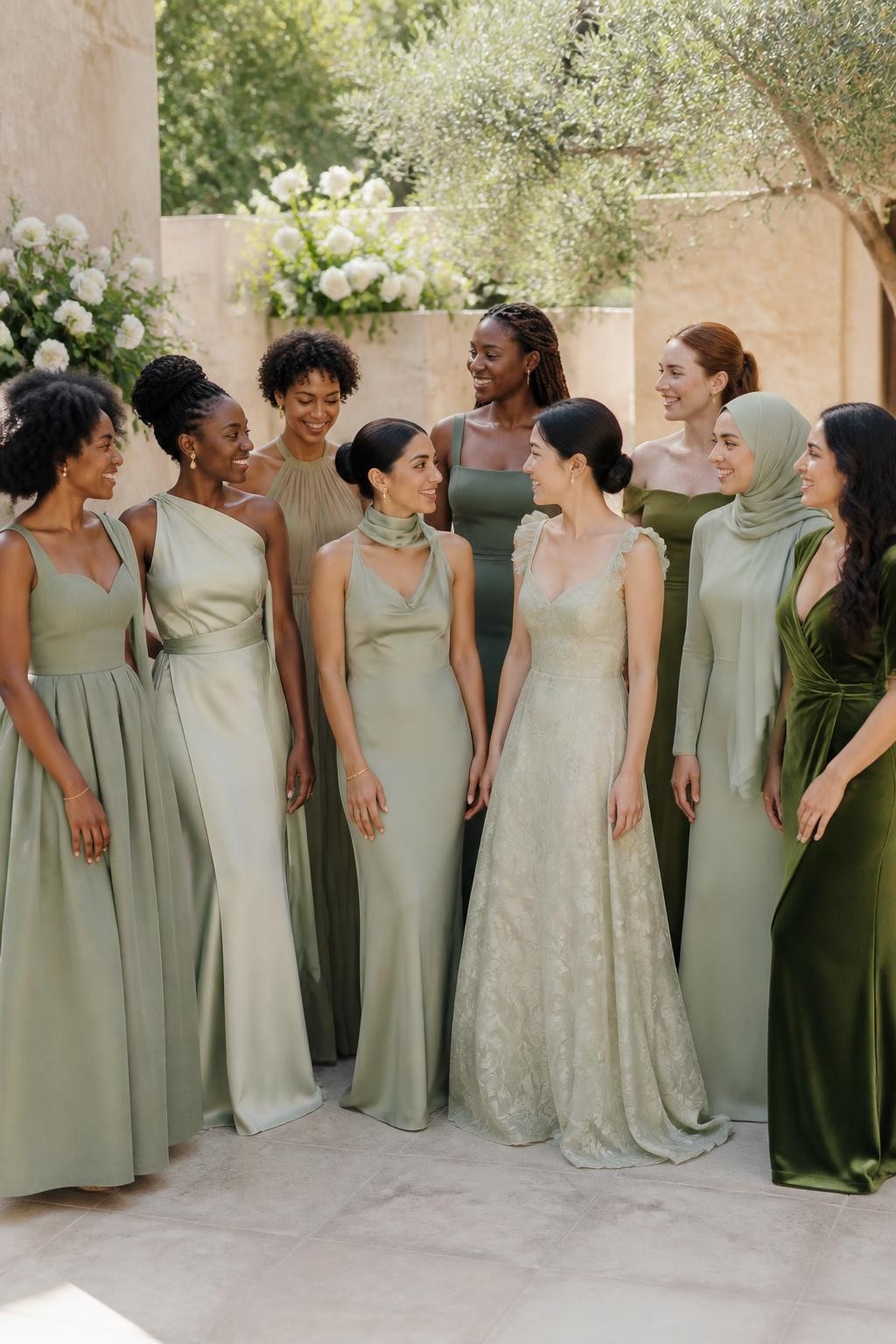
A tonal sage palette creates a soft, botanical look without forcing every bridesmaid into the exact same green. Slight variations such as eucalyptus, celadon, and moss give the group depth while still appearing calm and connected.
Let the dresses vary in texture and neckline, but keep the hem length and overall level of formality similar. Ivory bouquets and simple gold jewelry will help the different greens settle into one graceful wedding-party look.
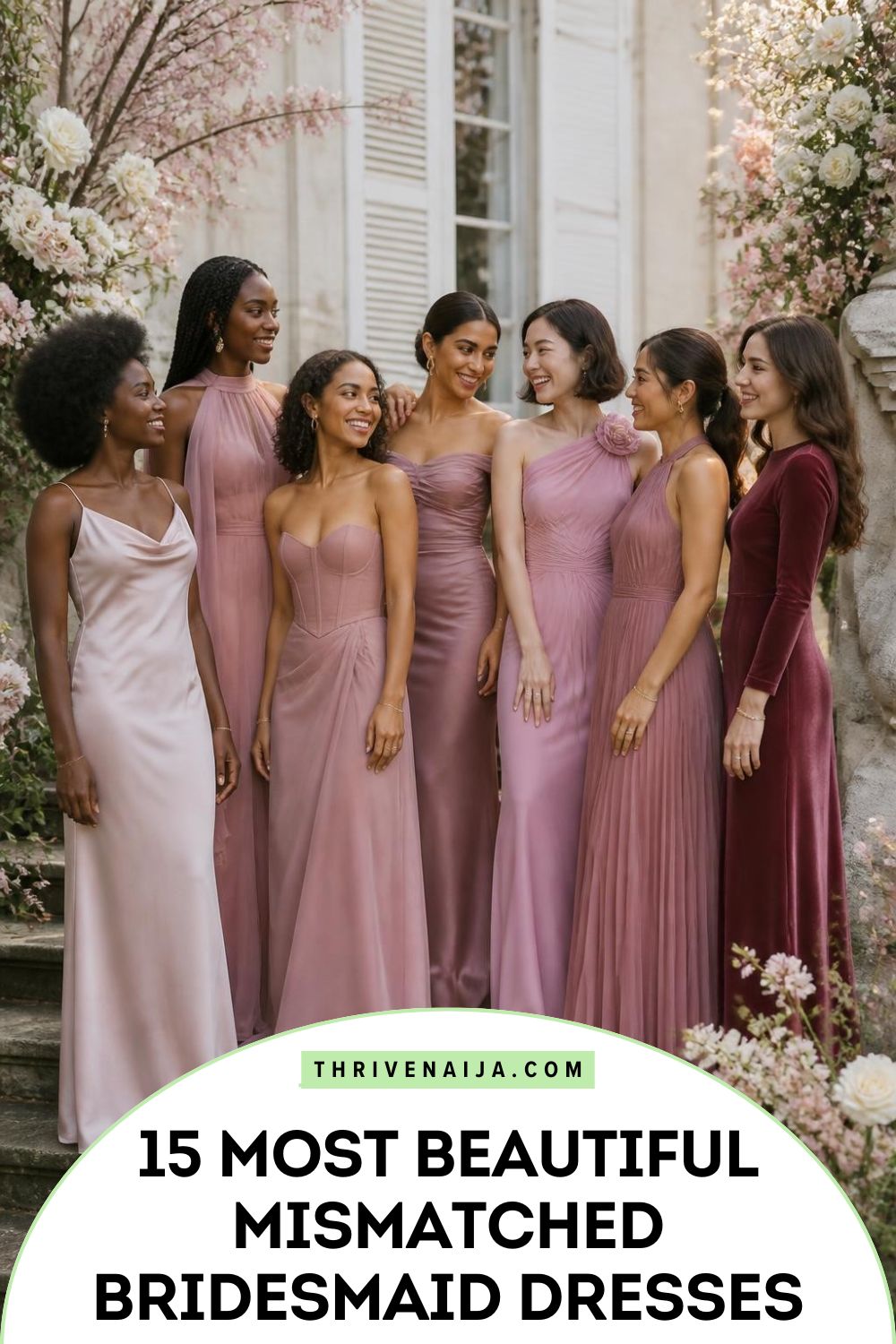
2. Blush, Rose, and Mauve Ombré Dresses
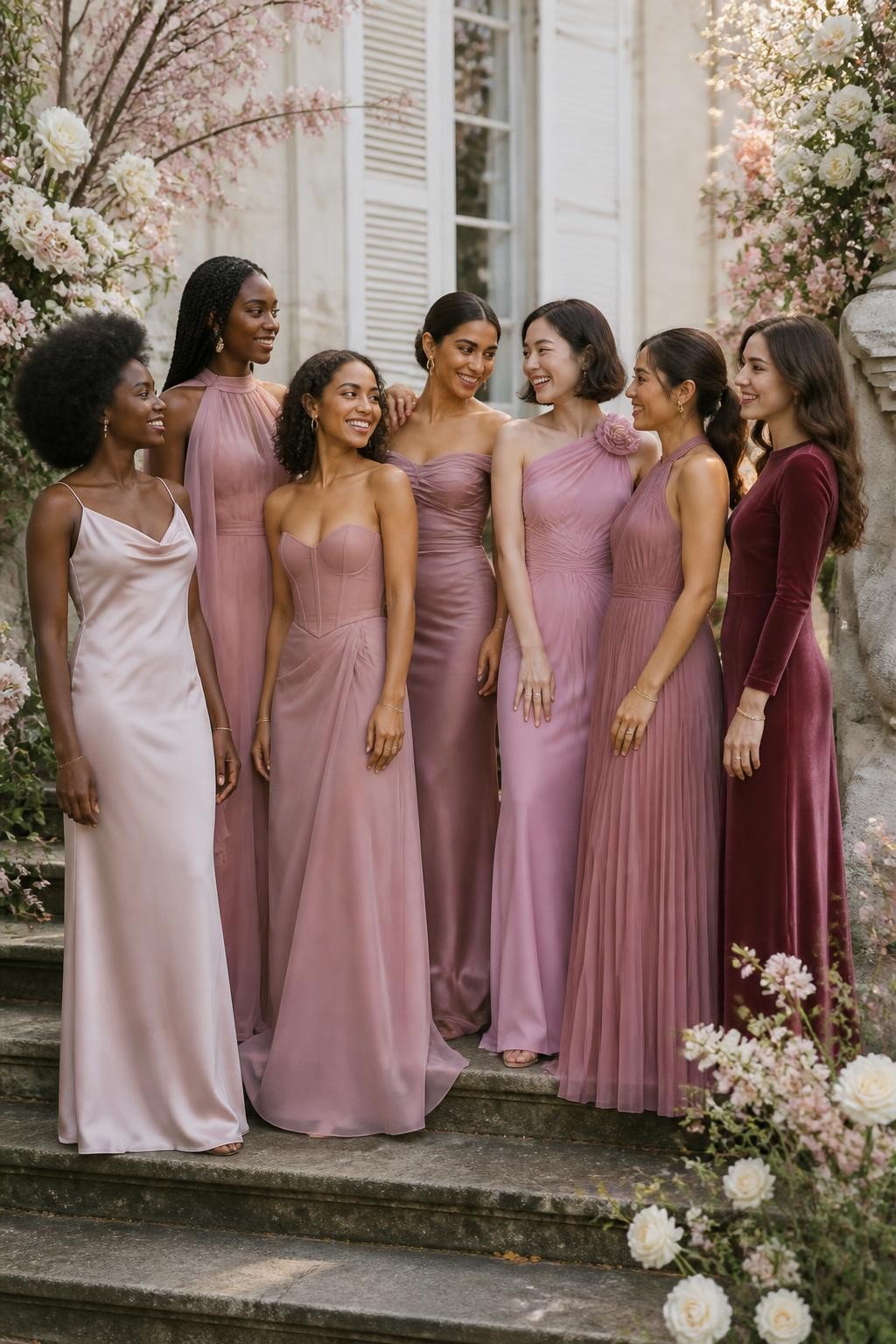
Moving gradually from pale blush to deeper mauve creates an ombré effect across the bridal party. The color progression feels intentional in group photographs while allowing each bridesmaid to wear a pink tone that suits her complexion.
Arrange the dresses from lightest to darkest when planning photographs, but do not make the lineup feel overly rigid. Repeating ivory bouquets and one jewelry finish will give the varied shades a clean visual anchor.
3. Butter Yellow Dresses With One Floral Standout
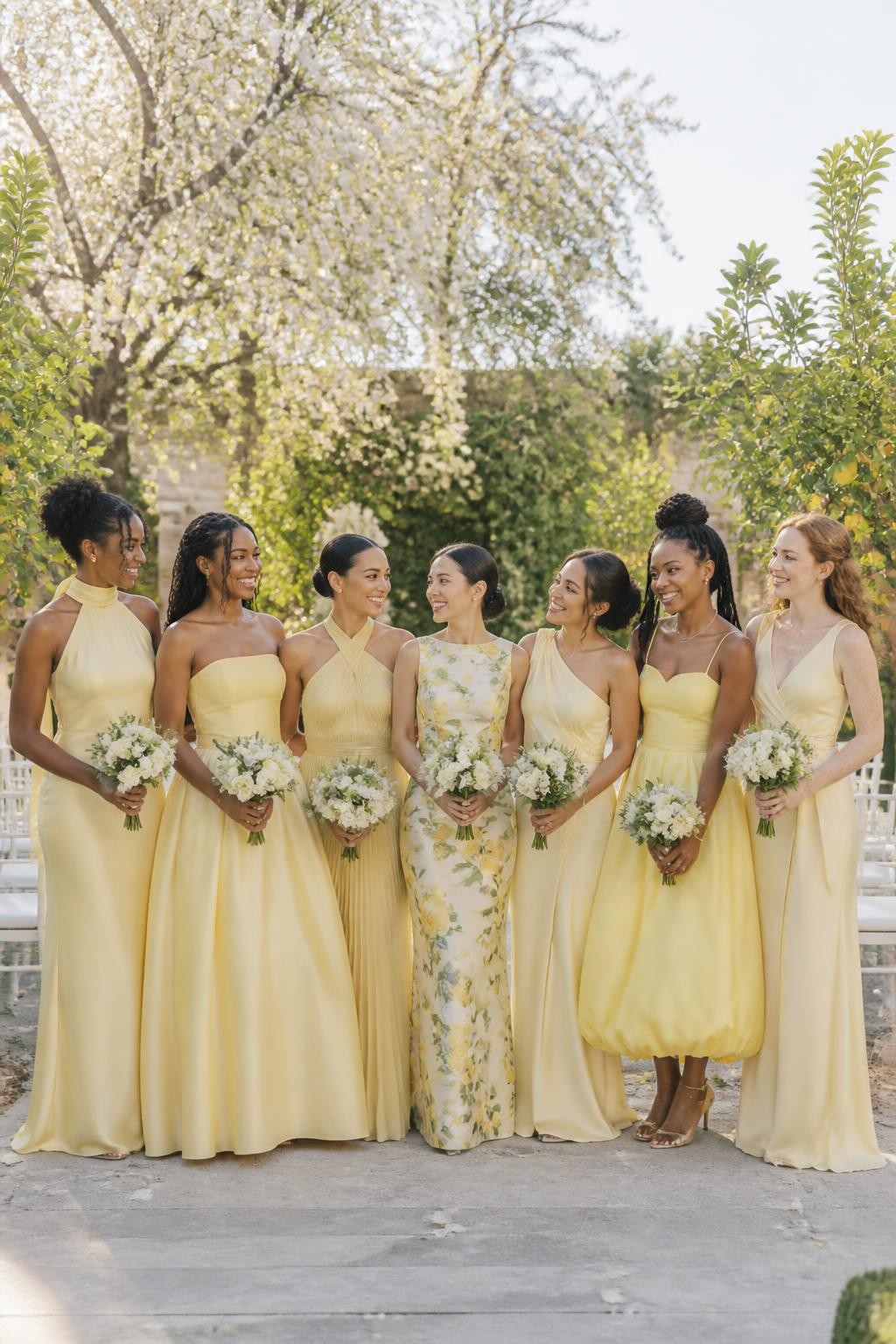
A single floral dress can distinguish the maid of honor while allowing the rest of the group to remain within a soft butter-yellow palette. The print adds interest without disrupting the overall color story because its background and flowers repeat the shades in the solid dresses.
Choose a floral pattern with large, clear blooms rather than a busy scatter of tiny flowers. Keep the other dresses free from prints and use simple ivory bouquets so the standout gown feels deliberate.
4. Mixed Pastels With Modern Silhouettes
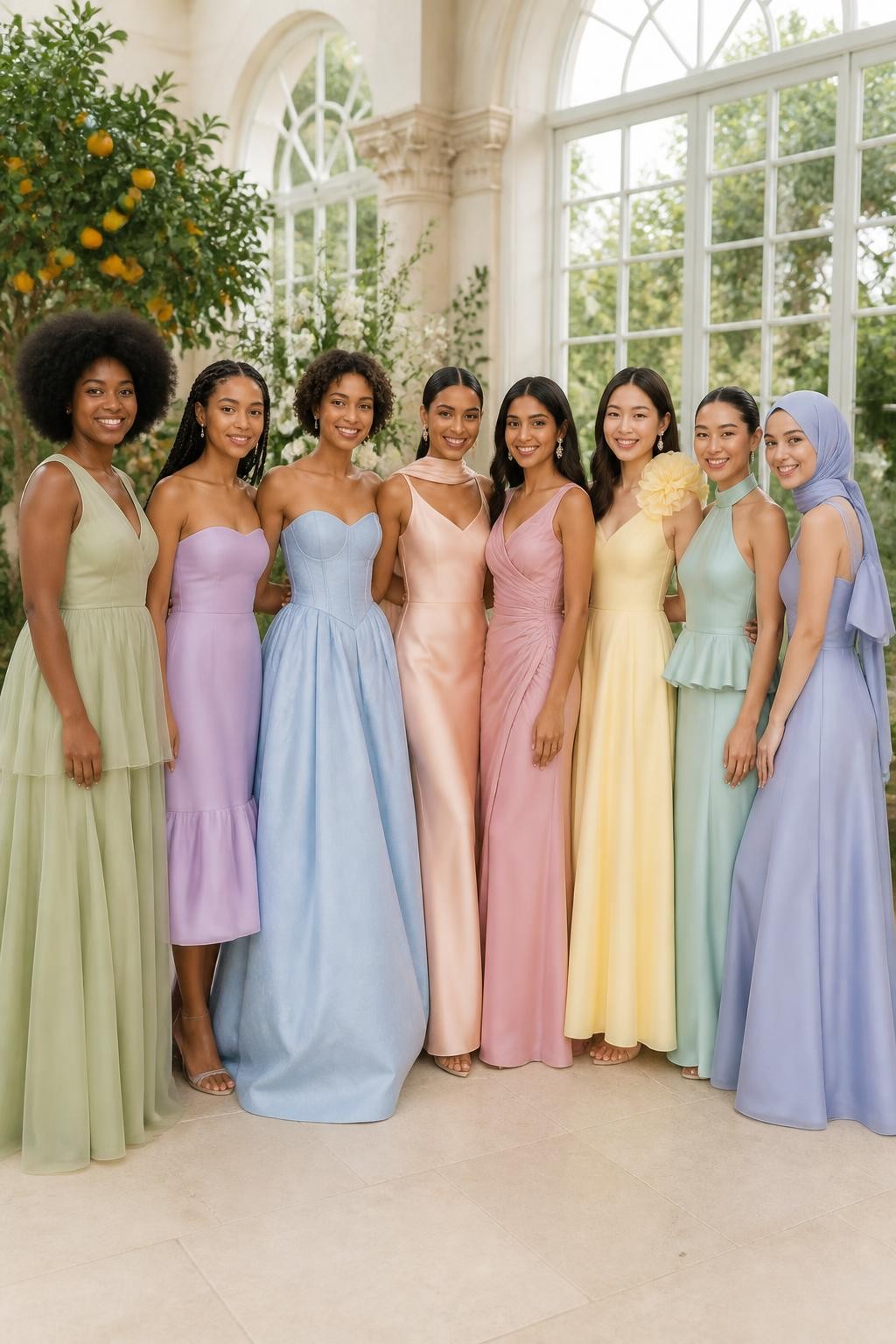
A mixed pastel bridal party feels cheerful and expressive, especially when each color is soft enough to sit comfortably beside the others. Modern silhouettes keep the combination from looking like a collection of ordinary spring gowns.
Limit the palette to gently muted shades with similar levels of brightness. Matching bouquets and one shared metallic accessory will bring order to the different colors, fabrics, and dress shapes.
5. All-Black Dresses With Different Necklines
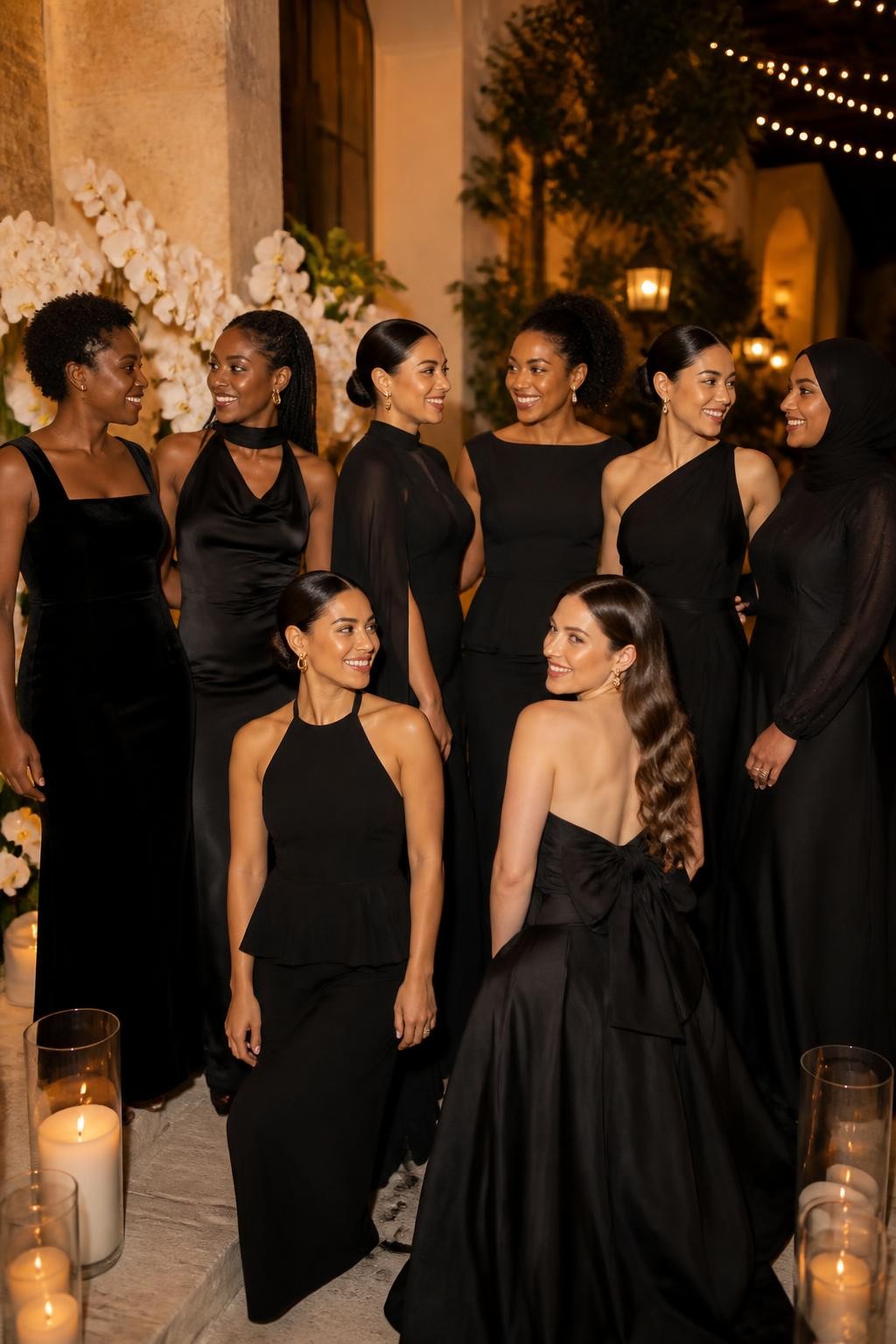
Keeping every dress black allows you to experiment with dramatic differences in neckline, sleeve, and texture. Satin, velvet, chiffon, crepe, and organza create enough variation to make the group interesting while the shared color maintains a strong sense of unity.
Set a consistent hem length and decide whether the dresses should have a matte or lightly lustrous finish. White bouquets and matching earrings will make the bridal party feel refined rather than overly dark.
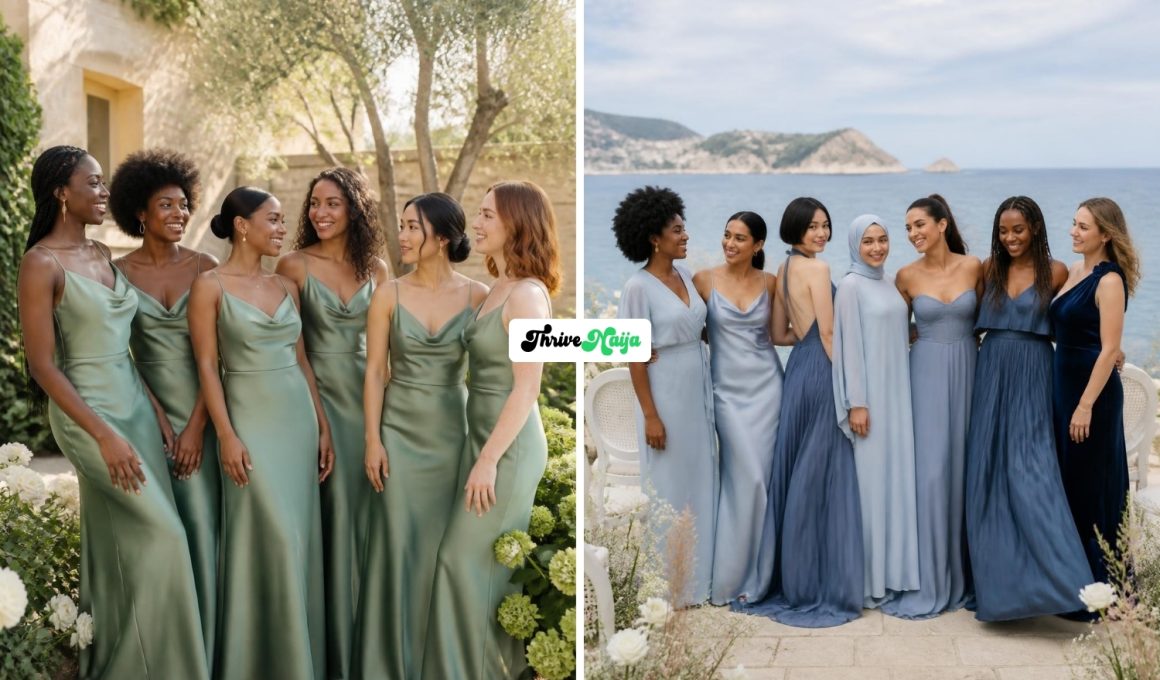
6. Coastal Blues From Mist to Navy
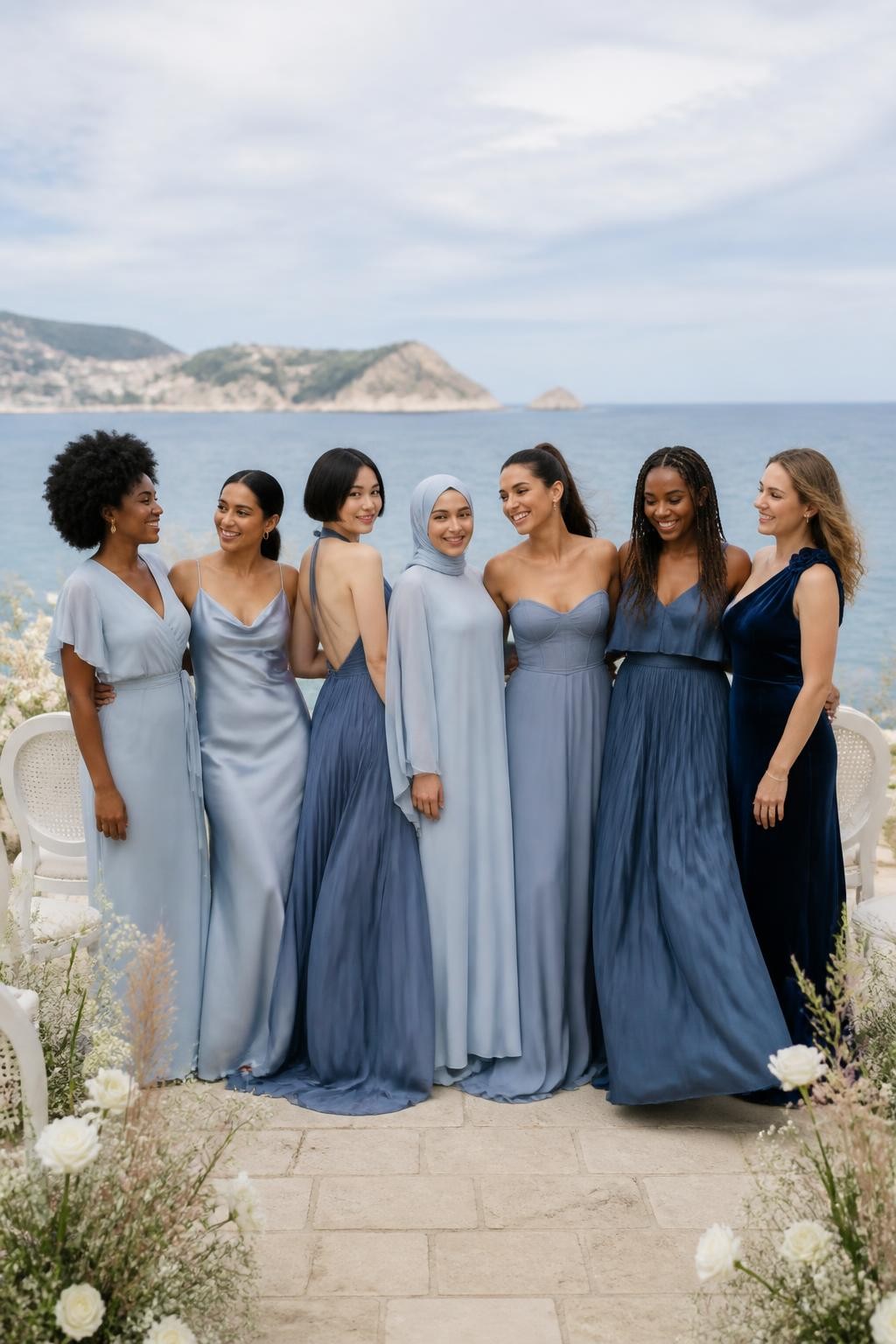
A palette that moves from pale mist blue to navy reflects the varied colors of the sea and sky. The darker dresses anchor the group, while the softer blues keep the overall look airy enough for an outdoor celebration.
Distribute the shades throughout the lineup instead of placing every dark dress on one side. White flowers, silver earrings, and neutral shoes will keep the coastal palette clean and effortless.
7. Champagne Neutrals With Soft Metallic Finishes
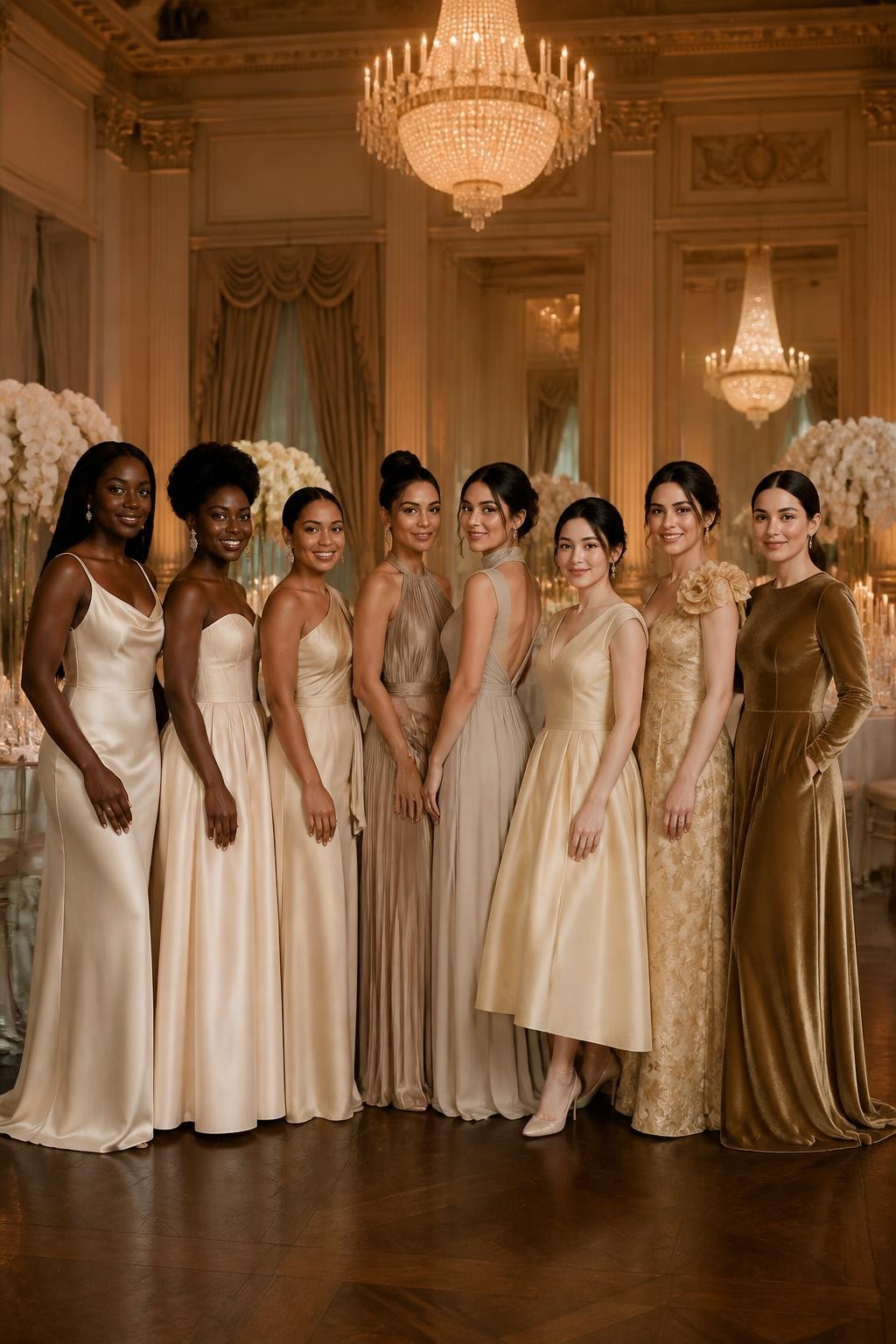
Mixing cream, champagne, taupe, and pale metallic shades creates a warm neutral bridal party with plenty of depth. Combining matte and reflective surfaces prevents the dresses from blending into one flat beige block.
Check the undertones carefully, as some champagne shades lean pink while others appear yellow or grey. Ivory bouquets and understated earrings will help the combination feel luxurious without becoming overly glittery.
8. Burgundy, Plum, and Chocolate Dresses
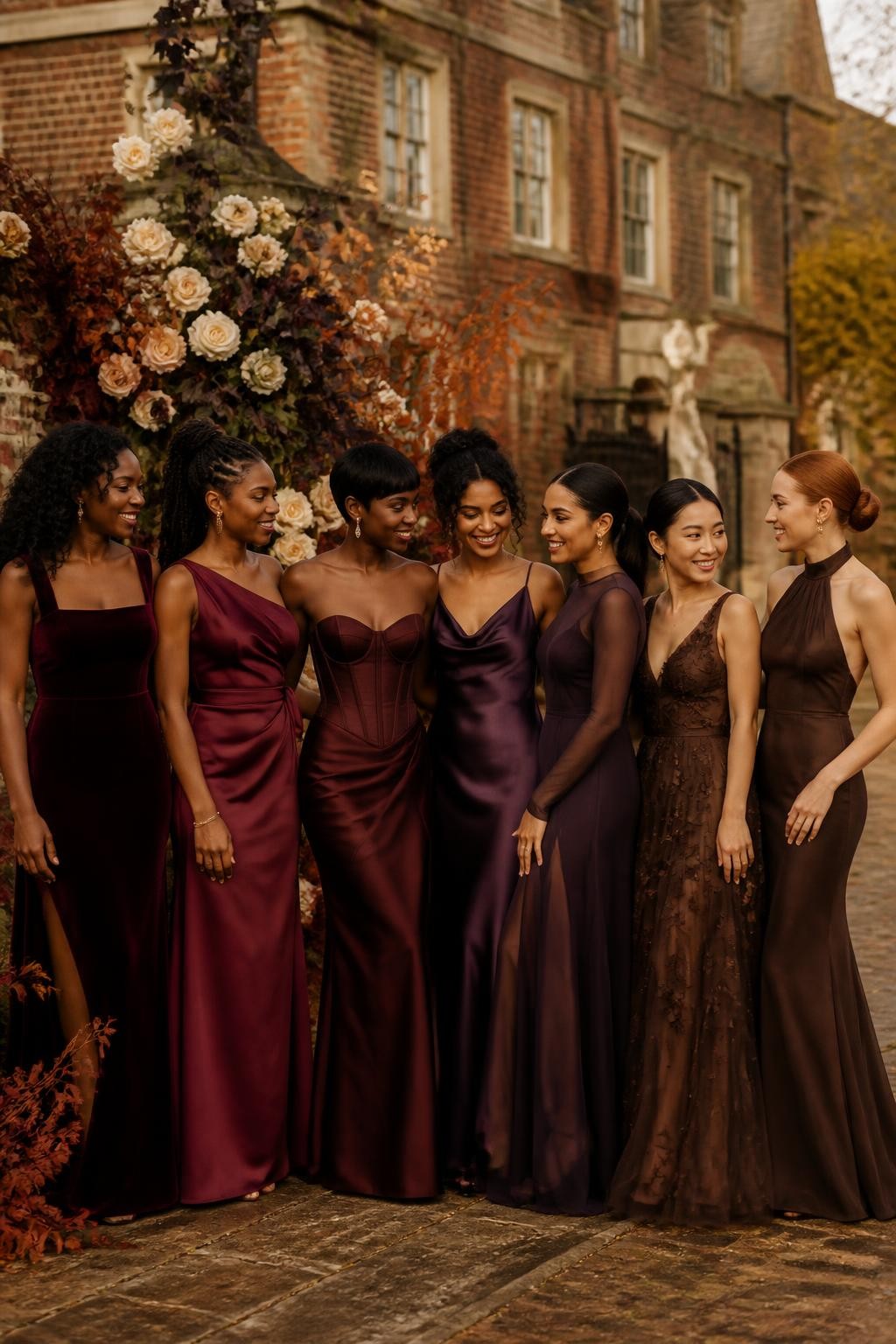
Burgundy, plum, and chocolate form a rich autumn palette that feels warmer and more layered than using one dark red shade. The brown dresses soften the purples, while the burgundy tones bring romance and color.
Choose flowers in cream, muted blush, or soft peach to brighten the deeper dresses. Repeating the same warm gold jewelry across the group will help the three color families feel naturally connected.
9. Sage Dresses With Floral and Botanical Prints
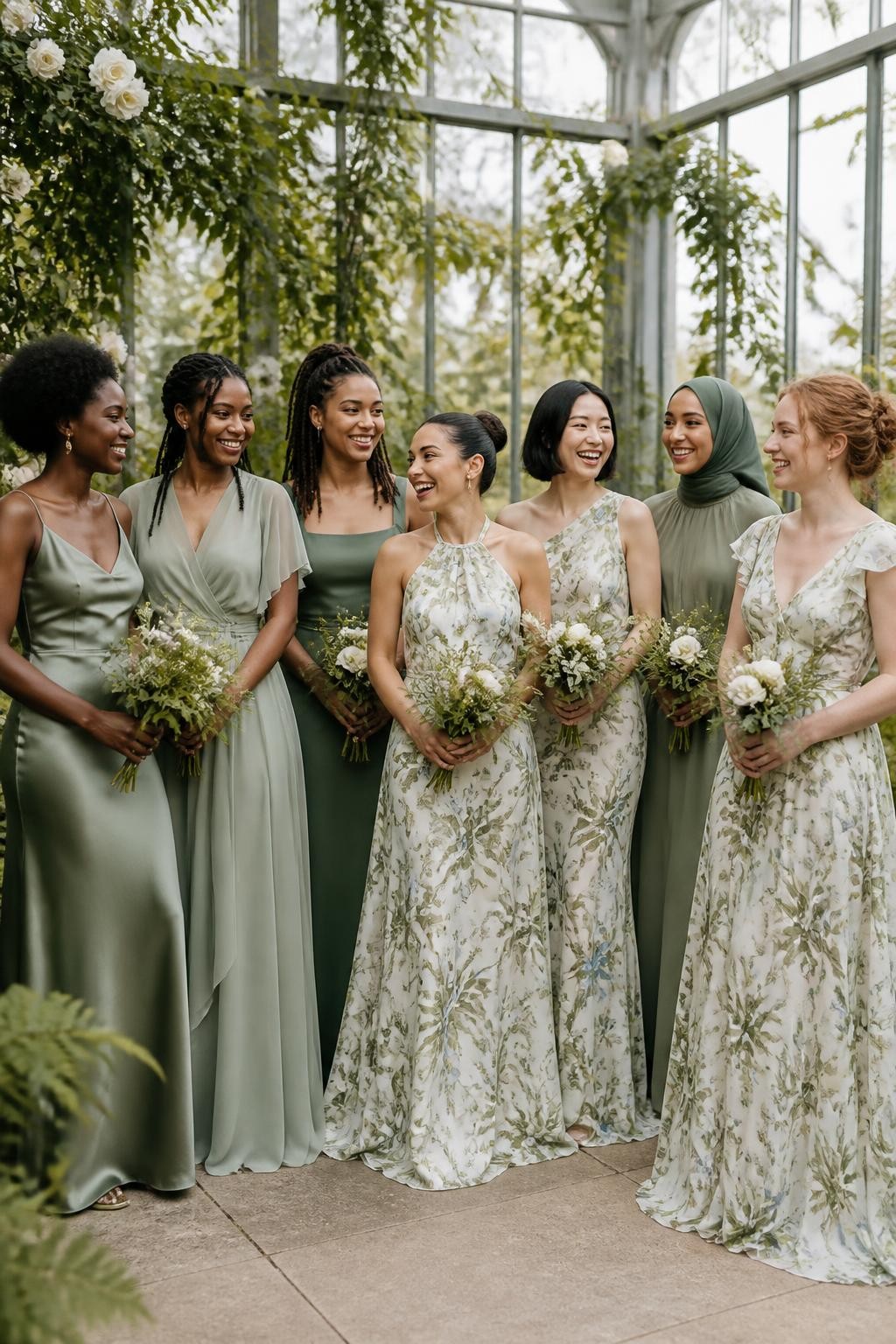
Combining solid green dresses with a small number of botanical prints creates a garden-inspired bridal party that feels lively without becoming chaotic. The prints work best when their leaf colors closely match the solid dresses.
Use no more than two or three printed gowns, depending on the size of the group. Keeping the remaining dresses simple will give the patterns enough space to stand out while maintaining a calm overall look.
10. Sunset Shades From Peach to Terracotta
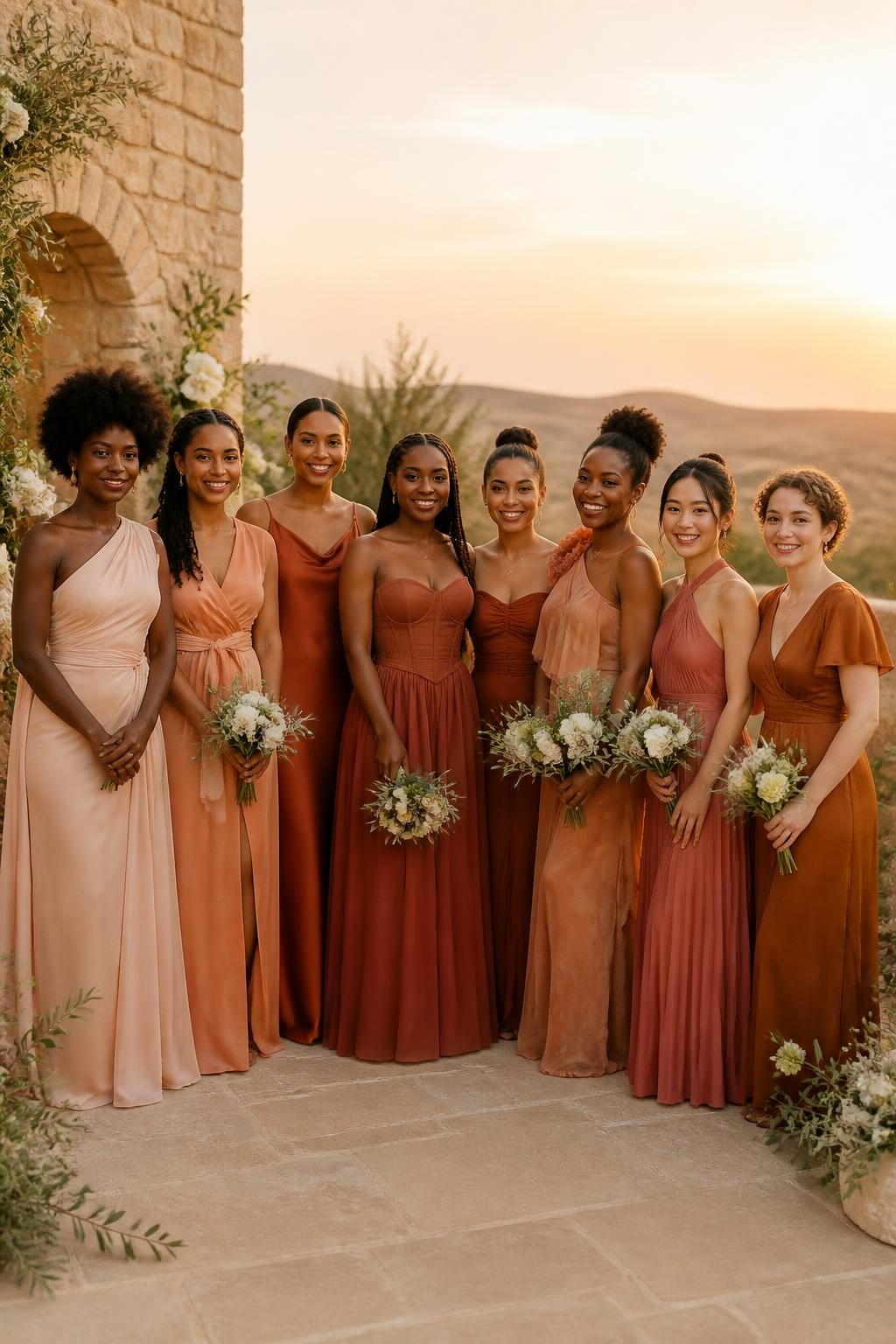
A sunset palette moves gradually from pale peach into deeper terracotta and rust. The warm shades look especially beautiful outdoors, where natural evening light helps the colors blend together softly.
Avoid placing every pale dress together and every dark one at the opposite end. Mixing the shades throughout the group creates a more relaxed composition and keeps the deeper colors from feeling too heavy.
11. Jewel-Tone Dresses With Velvet Accents
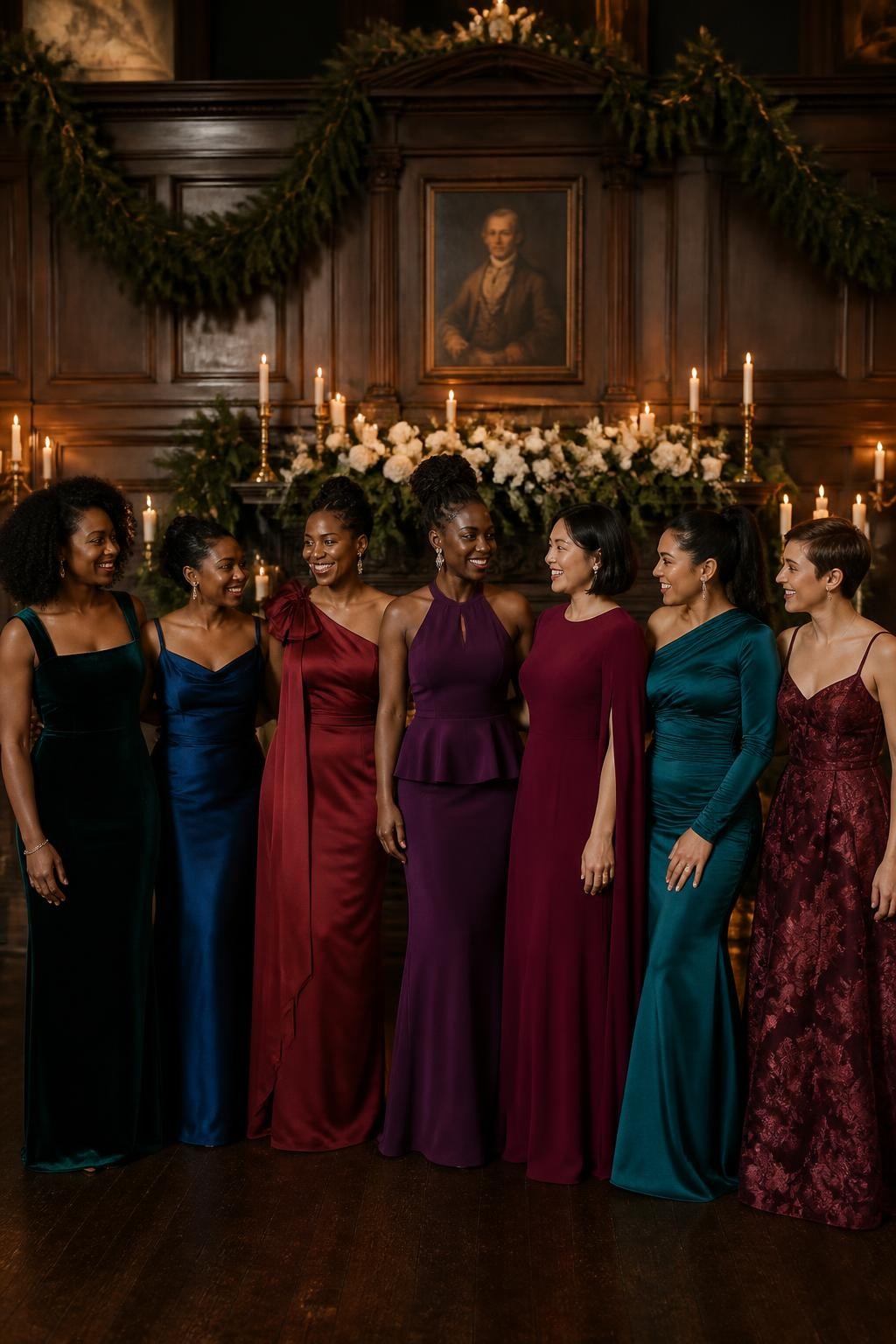
Jewel tones create a bold bridal party that feels especially fitting for winter or evening weddings. Velvet accents add richness, while satin and chiffon keep the combination from becoming visually heavy.
Choose shades with similar depth so one bright dress does not overpower the rest. Ivory bouquets and matching metallic accessories will give the colorful collection a sophisticated finishing point.
12. Different Dresses in One Exact Fabric
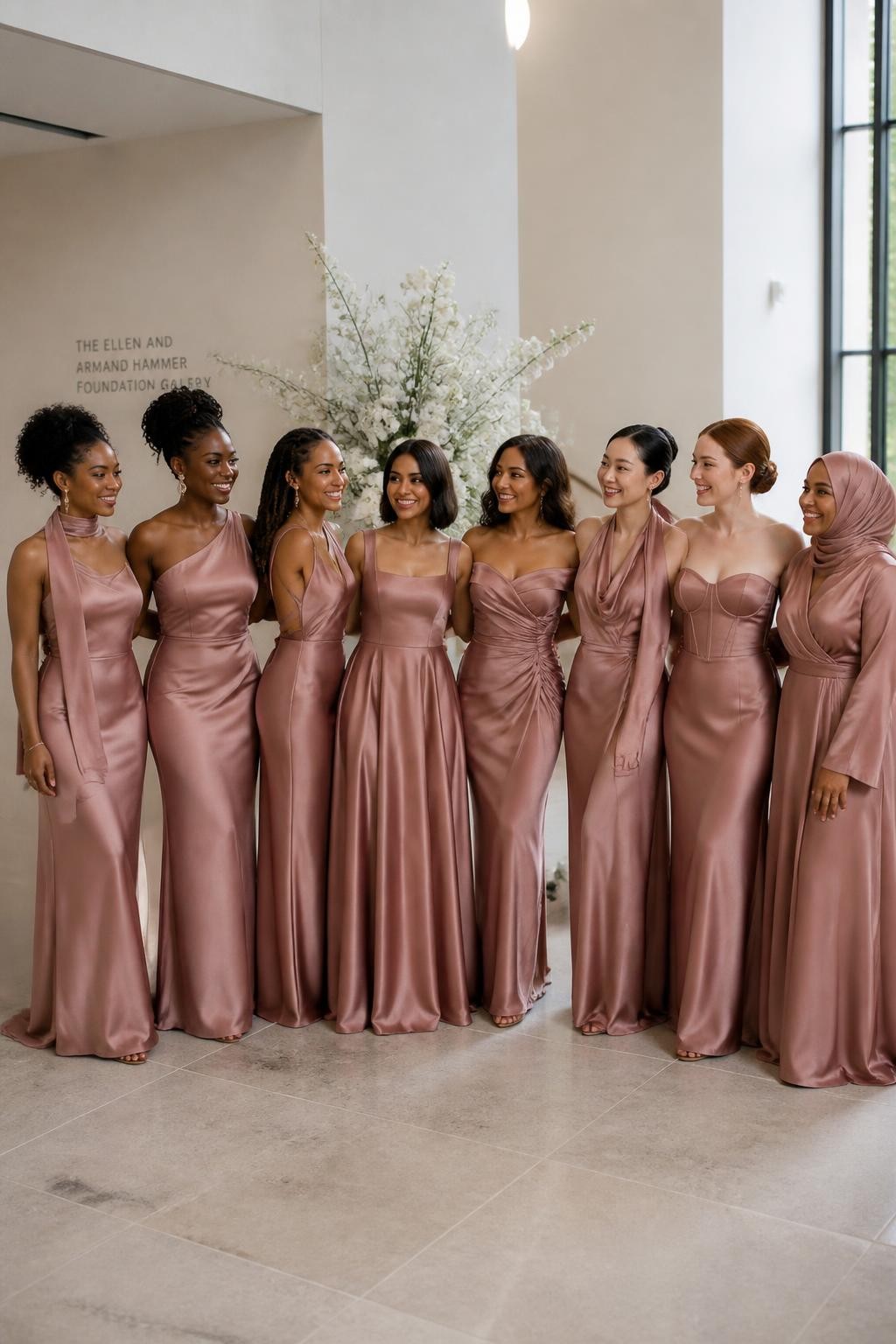
Using one exact fabric and color is one of the easiest ways to make different silhouettes feel coordinated. Each bridesmaid can choose her preferred neckline and amount of coverage without changing the shared visual foundation.
Order every dress from the same fabric collection rather than trusting similar color names from different brands. Even small differences in weave or dye can become noticeable when the dresses stand beside one another.
13. Black, Ivory, and Soft Taupe Dresses
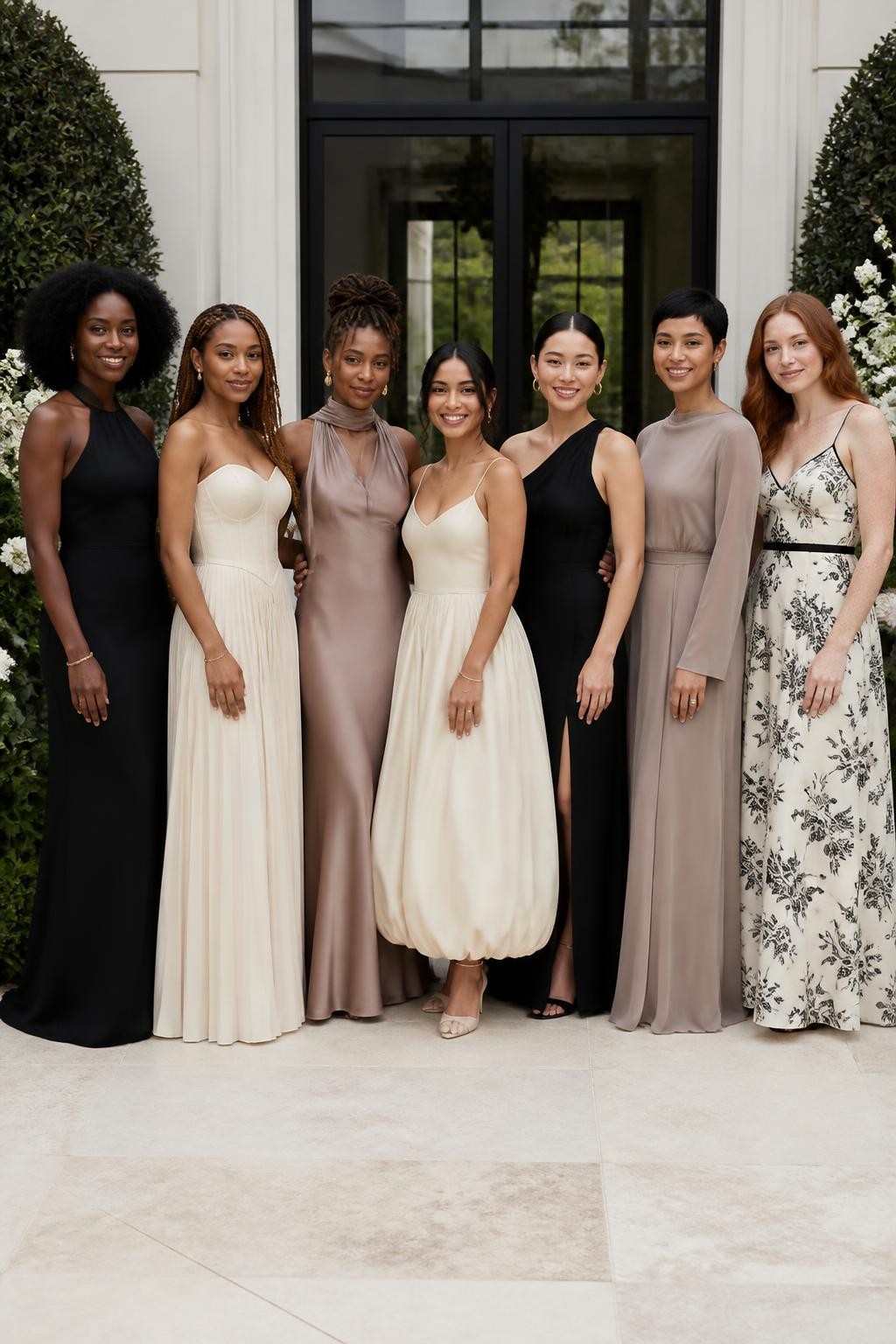
A black, ivory, and taupe palette feels clean and editorial without requiring bright color. The neutral shades allow strong silhouettes and interesting textures to become the main focus.
Use ivory carefully so none of the dresses compete with the bride’s gown. Printed dresses, taupe undertones, black trims, or clearly different silhouettes can create enough separation while preserving the elegant palette.
14. Mixed Hemlines in One Pastel Palette
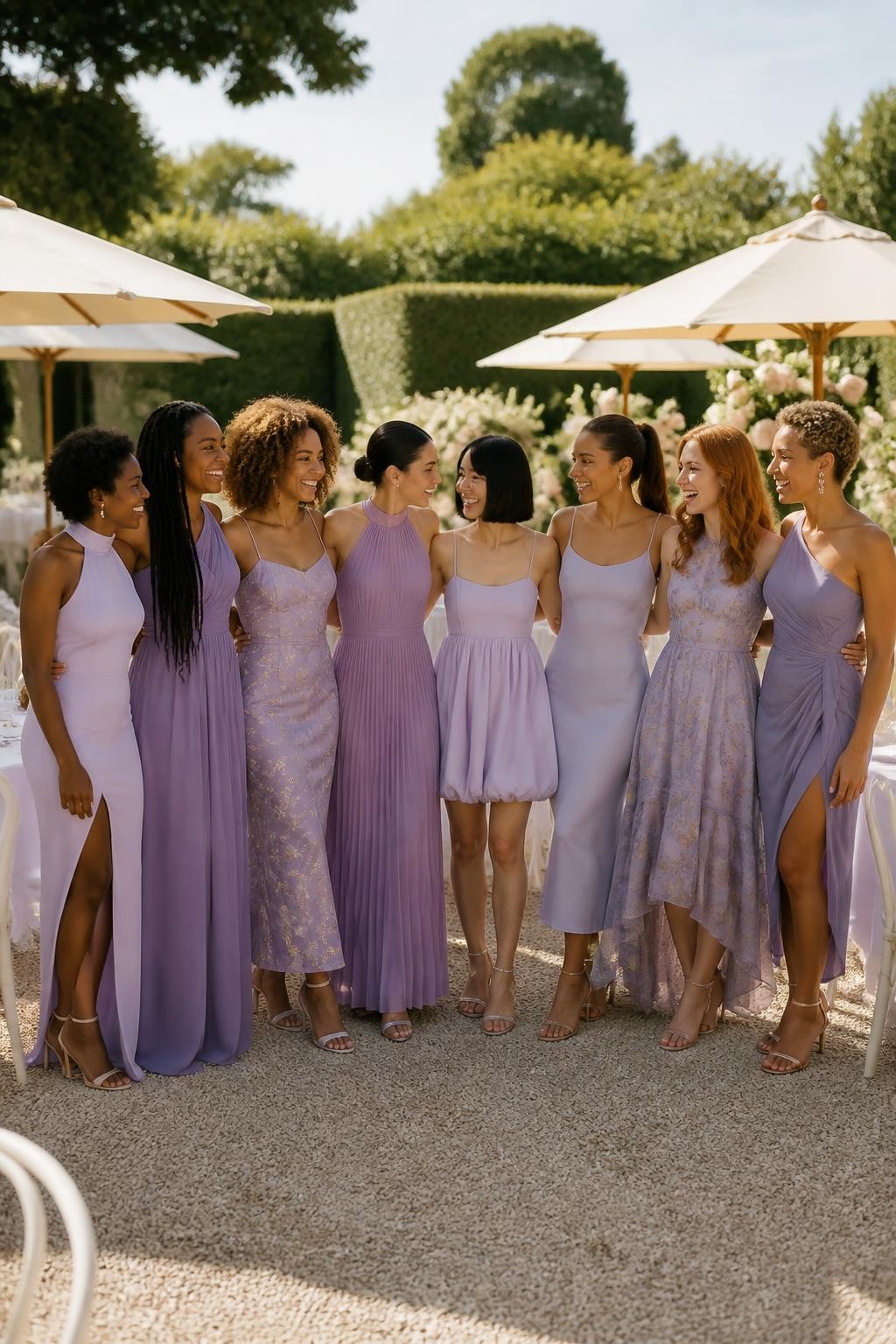
Mixing floor-length, midi, tea-length, and high-low dresses can give the bridal party a playful fashion-editorial look. Keeping every dress within one narrow color family stops the varied hems from feeling disorganized.
Choose shoes with a shared mood, such as delicate slingbacks or simple metallic sandals, because they will be visible on several bridesmaids. Distribute the different lengths throughout the lineup rather than arranging them from shortest to longest.
15. Personal Dresses Linked by One Styling Detail
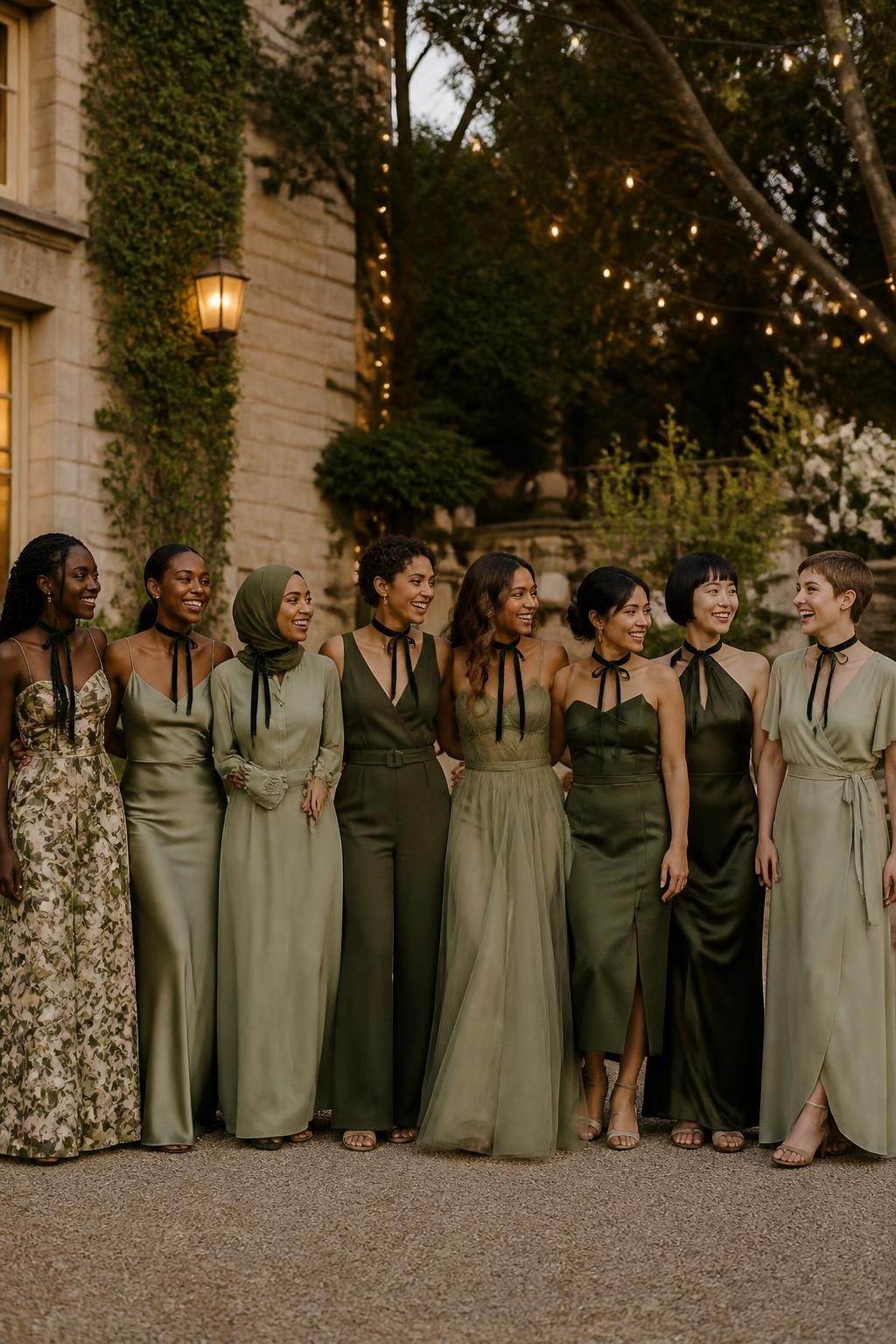
Allowing each bridesmaid to choose her own outfit can create the most personal version of mismatched dressing. A gown, jumpsuit, printed dress, and modest long-sleeved style can sit together successfully when they share a clear palette and level of formality.
Connect the outfits with one repeated detail, such as velvet neck ribbons, matching bouquets, identical earrings, or the same shoe color. That small point of consistency will make the individual choices feel like a planned collection rather than separate wedding-guest outfits.