
Table of Contents Show
A museum trip has a quiet kind of beauty. The tall walls, soft lighting, stone floors, paintings, sculptures, glass cases, and open rooms can make even a simple photo feel thoughtful and stylish.
The best museum photos feel calm, curious, and natural. A slight turn toward a painting, a hand holding a ticket, a slow walk down a hallway, or a quiet pause on a bench can make the picture feel like part of the trip rather than a forced pose.
1. Ticket Stub First Look
Tired of Natural Hair Breakage, Shrinkage & Tangles?
If your natural hair is always breaking, shrinking up, or taking forever to detangle, this ebook is for you. Learn simple ways to stop the damage and make wash days easier.
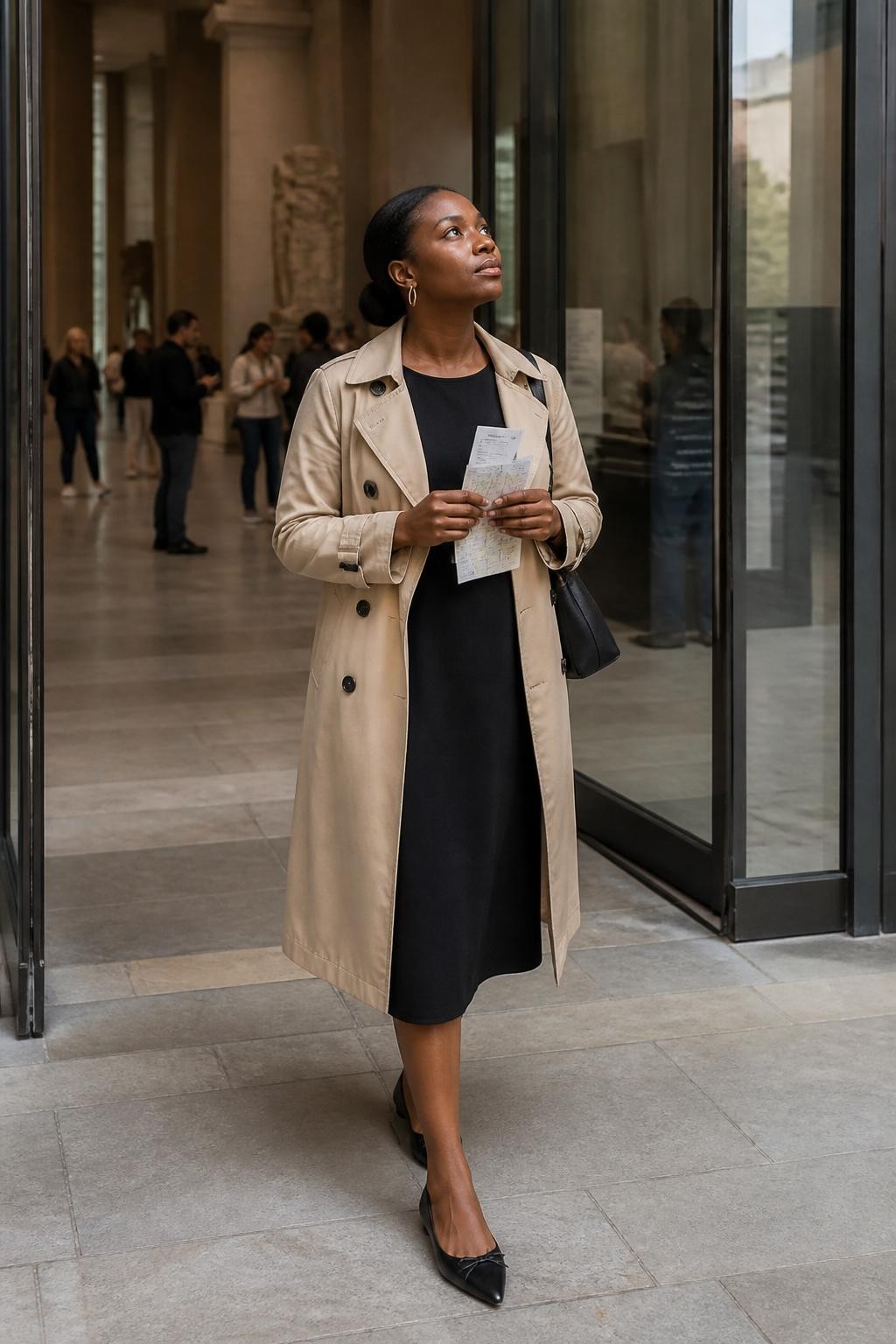
This pose works well at the start of the museum visit because it feels like the moment of arrival. Ask her to hold the ticket and map naturally, then look up toward the ceiling, signs, or first gallery entrance. The body should look like it is moving into the space, not standing frozen.
Use the museum entrance to show height, glass, light, and clean lines. A trench coat, simple dress, or neat flat shoes can help the image feel polished. Keep the expression soft and curious so the photo feels like a real first reaction.
2. Color Match Canvas Moment
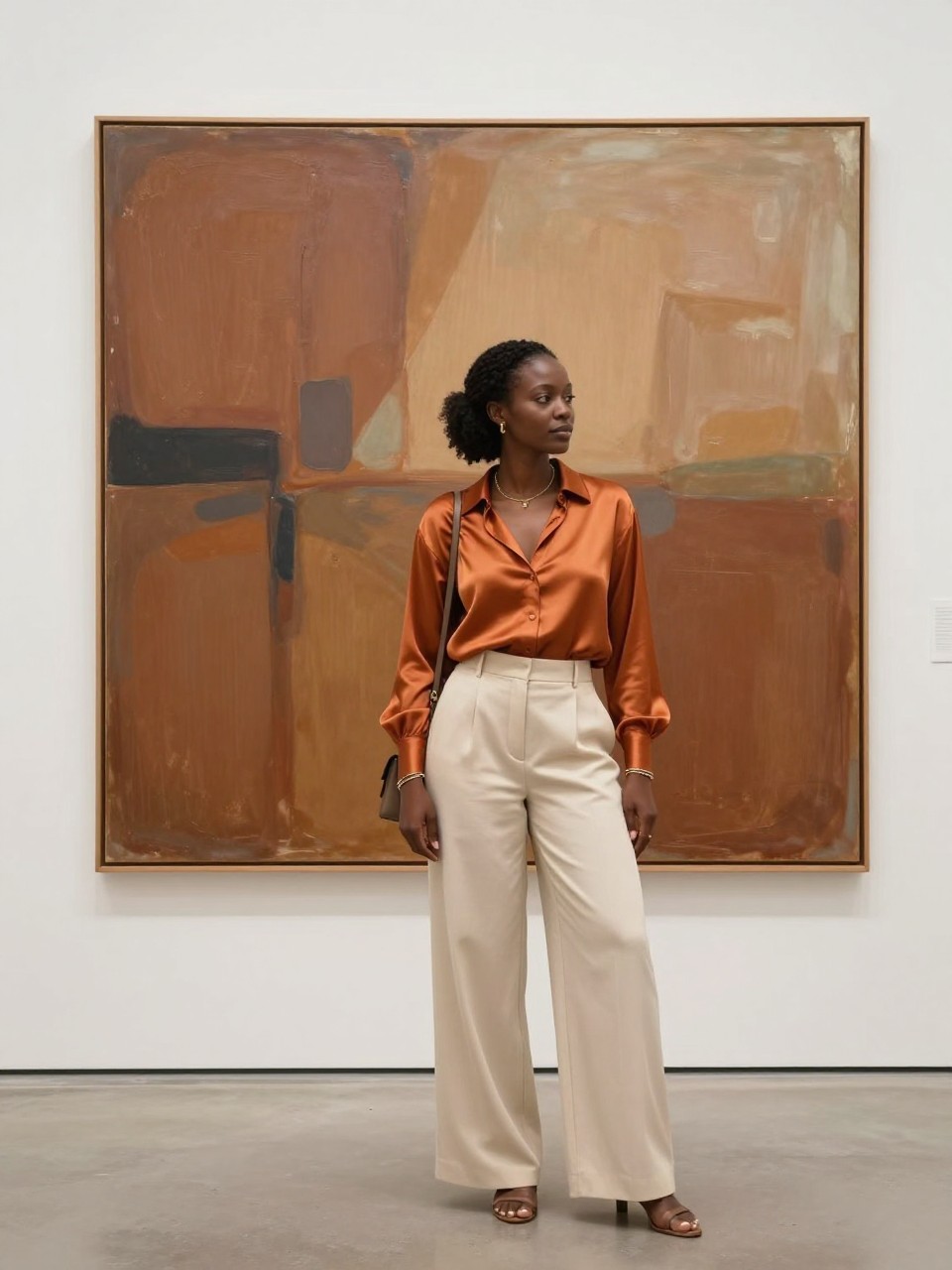
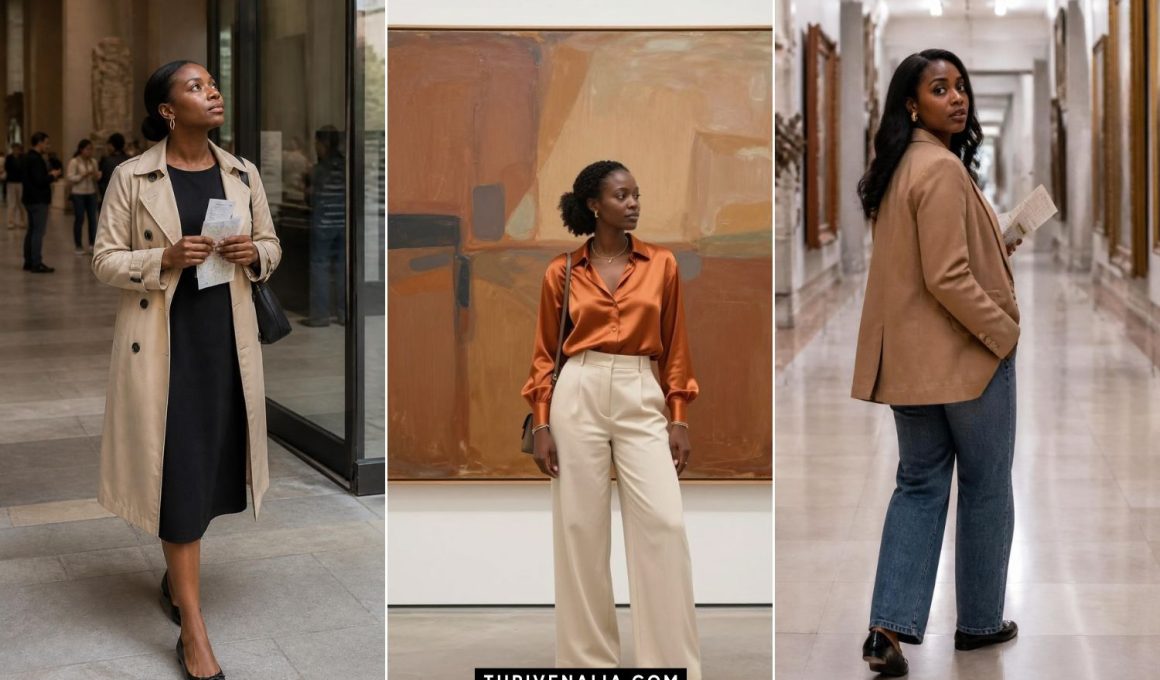
This pose feels modern because the outfit and artwork work together. Choose a painting with colors that repeat in the outfit, then have the person stand slightly off-center. Looking at the artwork instead of the camera makes the photo feel more thoughtful.
The pose should stay simple so the painting still has room to breathe. One hand can hold a bag strap, sleeve, or wrist. The clean wall and color match will make the photo look planned without feeling too staged.
3. Marble Stair Slow Turn
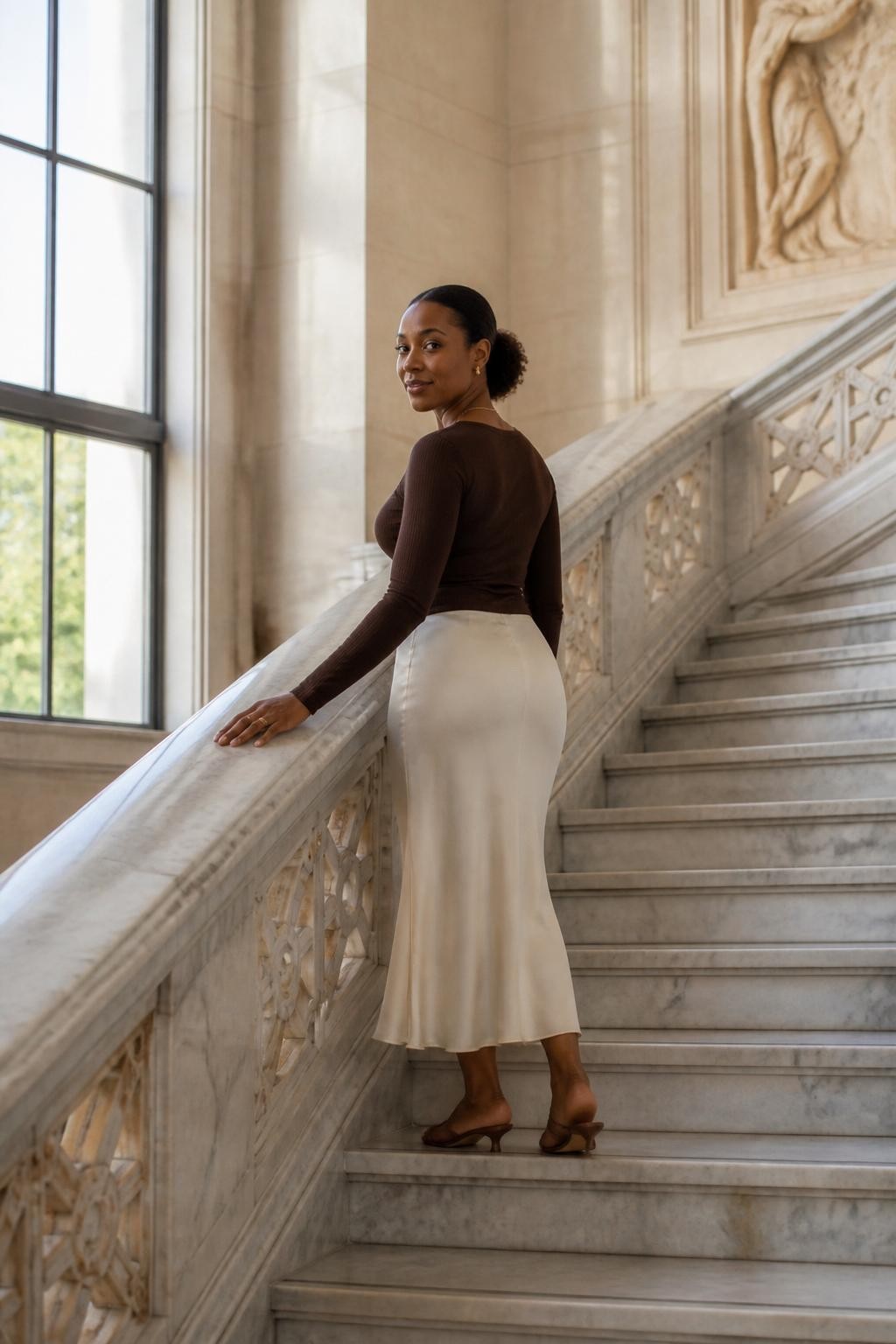
This pose uses the staircase to create a graceful shape. Ask her to walk up a few steps, pause, and turn her upper body back toward the camera. One hand on the railing helps the pose feel natural and steady.
The best angle is from below or slightly to the side, so the stairs create depth. Keep the movement slow and relaxed. A skirt, coat, or soft fabric can add a little motion without taking attention away from the architecture.
4. Audio Guide Daydream
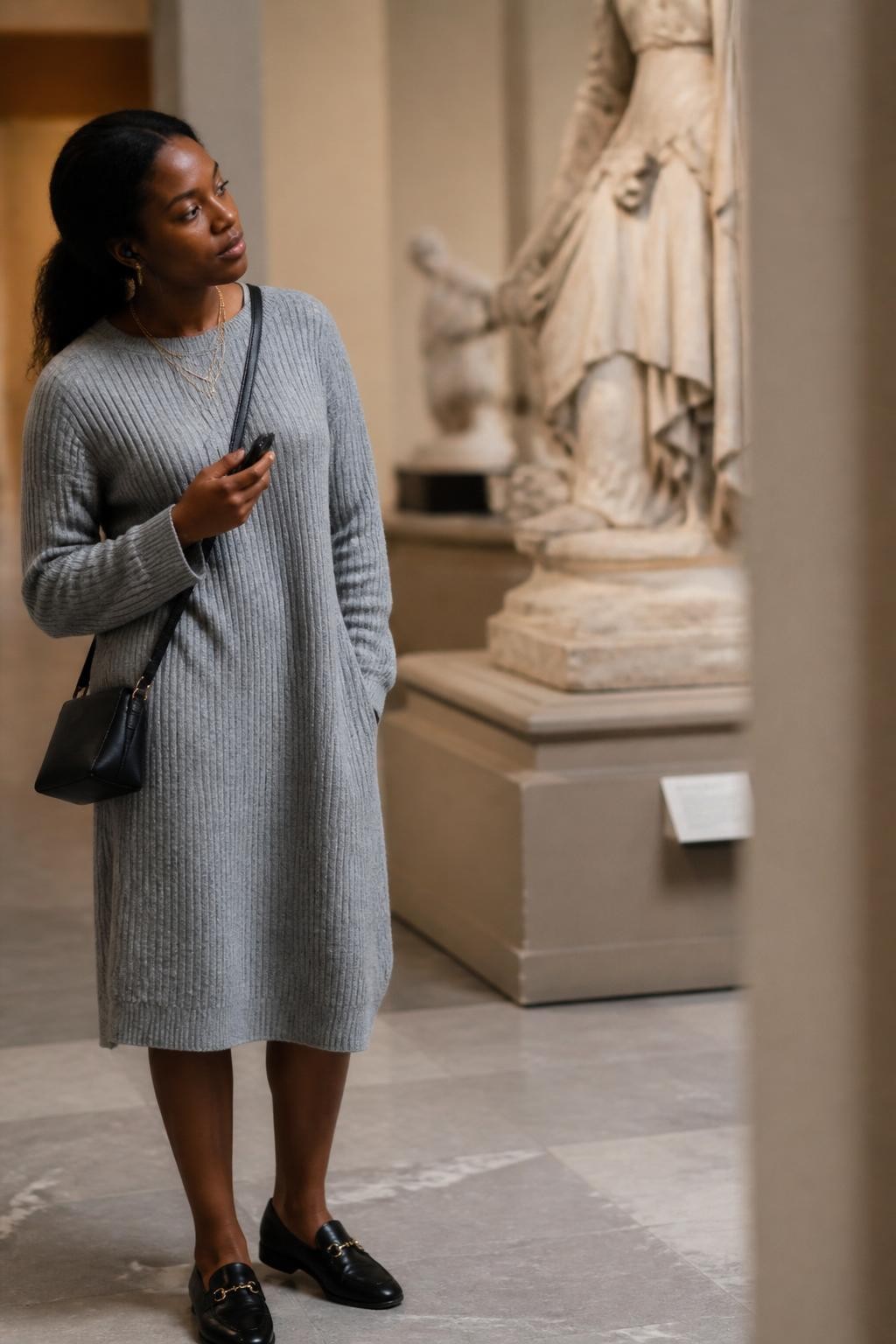
This pose is perfect for a museum photo that feels real and not overly styled. Ask her to hold the audio guide or phone near her waist while listening. A slight head tilt makes it look like she is paying attention to the story behind the artwork.
Place her near a sculpture or wall label, but keep the background soft. The pose should feel relaxed, with one hand tucked into a sleeve, pocket, or bag strap. It gives the photo a calm, thoughtful mood.
5. Sculpture Shadow Walk
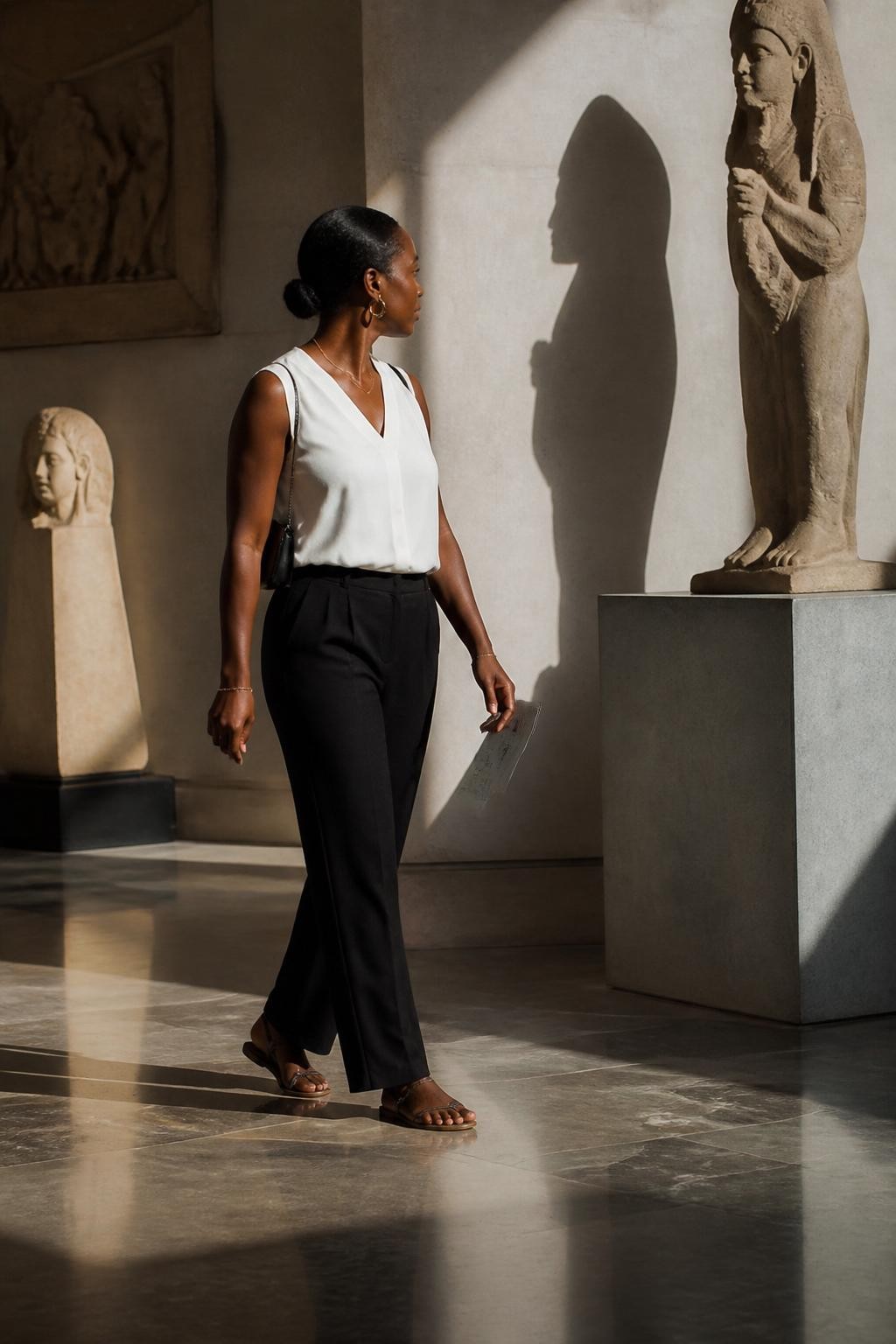
This pose works because the shadow becomes part of the photo. Have the person walk slowly past a sculpture where the light creates strong shapes on the wall or floor. The photographer should catch her mid-step so the photo has movement.
Ask her to look toward the sculpture or slightly away from the camera. The brochure gives one hand a purpose, while the walking motion keeps the pose from feeling stiff. This idea is great for sculpture rooms with dramatic lighting.
6. Glass Atrium Coat Swing
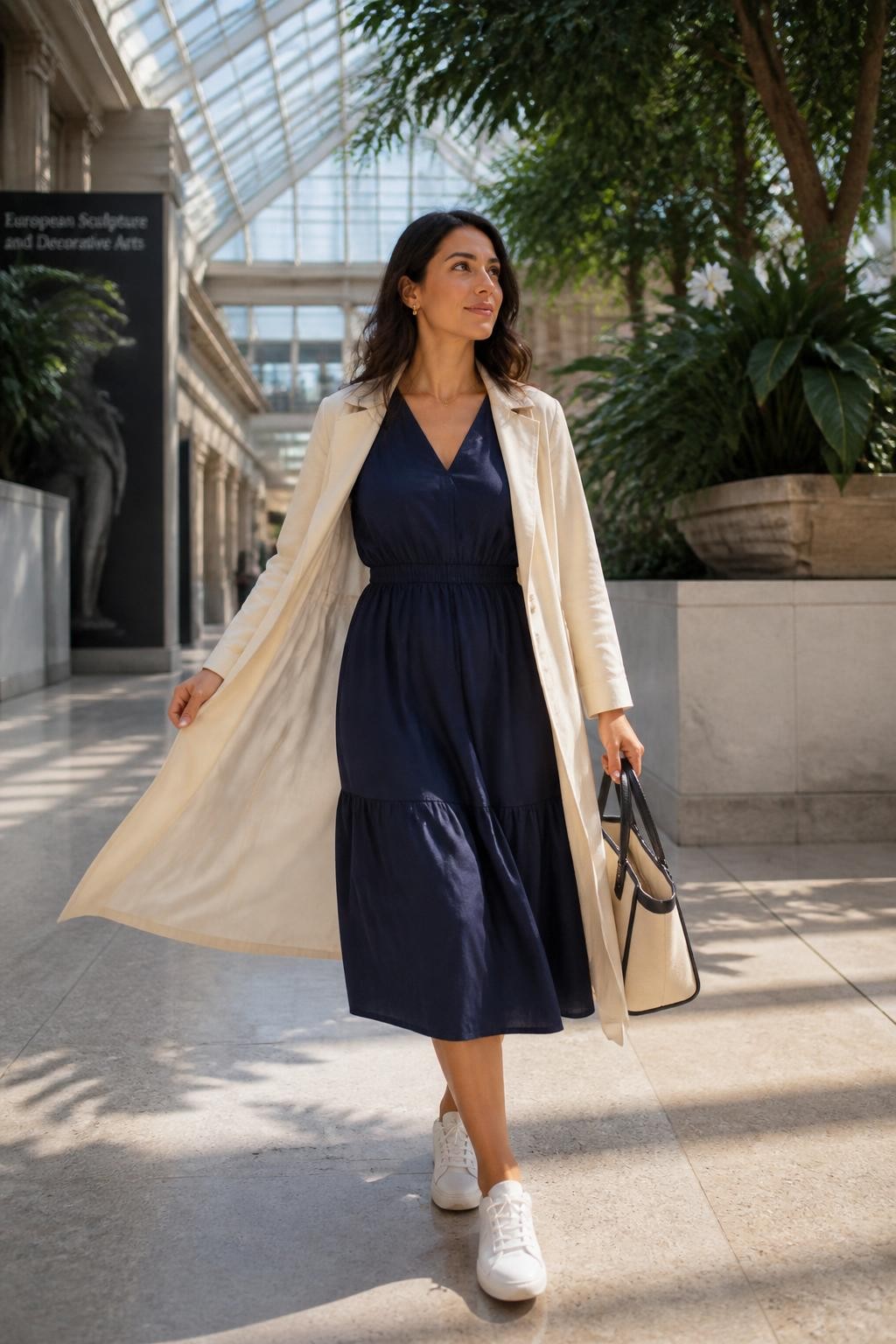
This pose is great for a museum with a large atrium or open lobby. Ask her to step forward slowly and swing the coat open just a little. The movement should feel easy, like she is walking into the light.
The atrium adds scale, so leave enough space around the body to show the glass ceiling, floor patterns, and plants. A coat, tote bag, or scarf gives the photo motion. Keep the pose light and relaxed.
7. Bench Lean With A View
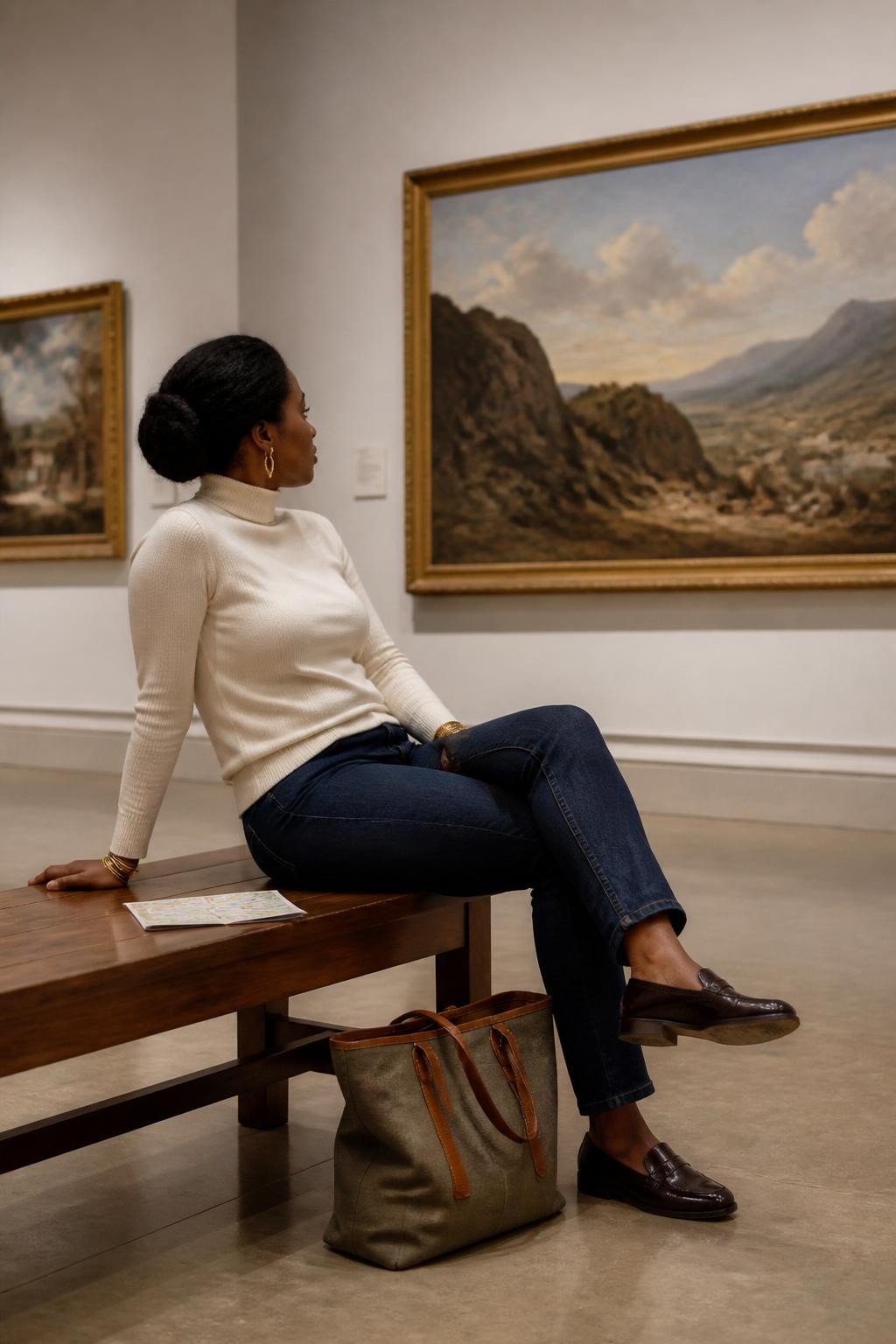
This pose is simple but beautiful when the body is angled well. Ask her to sit sideways on the bench, lean back on one hand, and turn her face toward the artwork. The pose should feel like she is taking a quiet break.
Place the bench far enough from the painting so the artwork can show in the frame. The map and tote bag add real trip details. A side angle works best because it shows the outfit, bench, painting, and relaxed body shape.
8. Display Case Close-Up
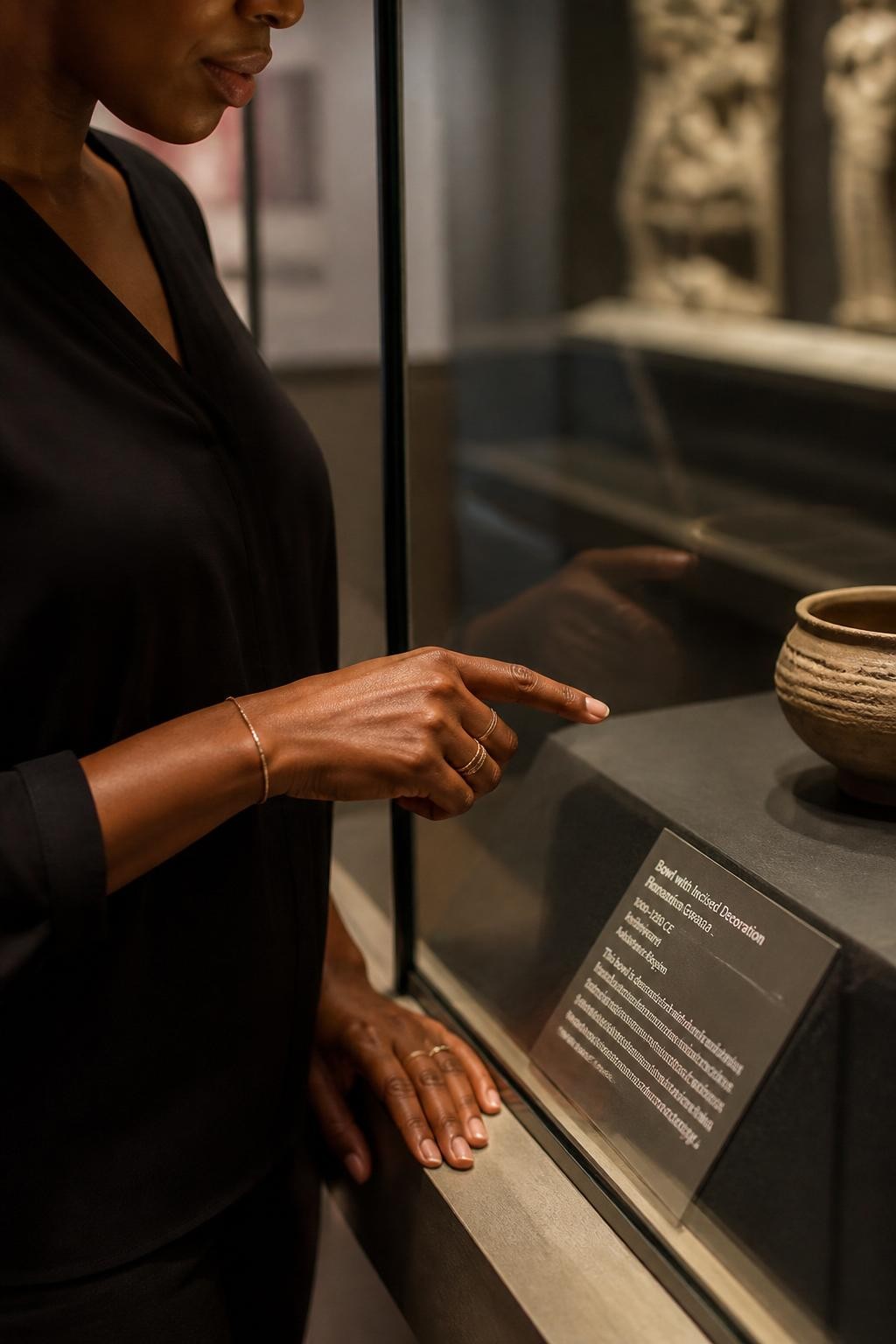
This pose is clever because it focuses on the hands and the exhibit instead of a full portrait. Ask her to gently point toward an object inside the case or to rest her hand near the glass. The touch should be light and respectful, without pressing on the display.
The photographer should frame the hands, jewelry, glass reflection, and artifact. This works well for history museums, fashion exhibits, jewelry displays, or small object collections. It gives the photo a more intimate and thoughtful feel.
9. Gift Shop Postcard Peek
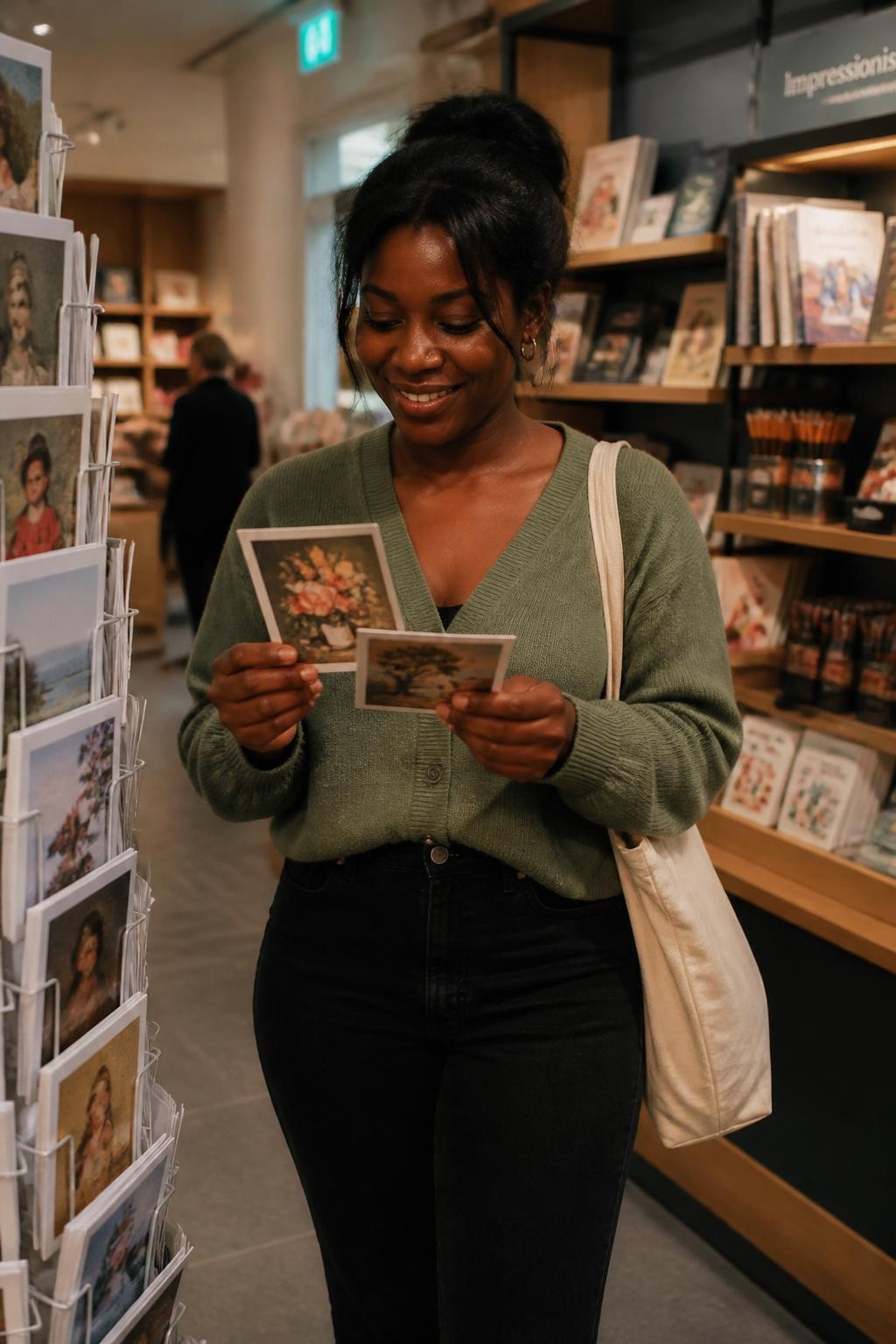
This pose is great for the end of the museum visit. Have her stand near a postcard rack or art print shelf and hold a few postcards in both hands. Looking down at the cards makes the pose feel sweet and natural.
The gift shop background adds color and detail, especially with books, prints, tote bags, and small souvenirs. Keep the body slightly angled to avoid a flat straight-on photo. This pose feels personal because it shows the little keepsake moment from the trip.
10. Projection Room Silhouette
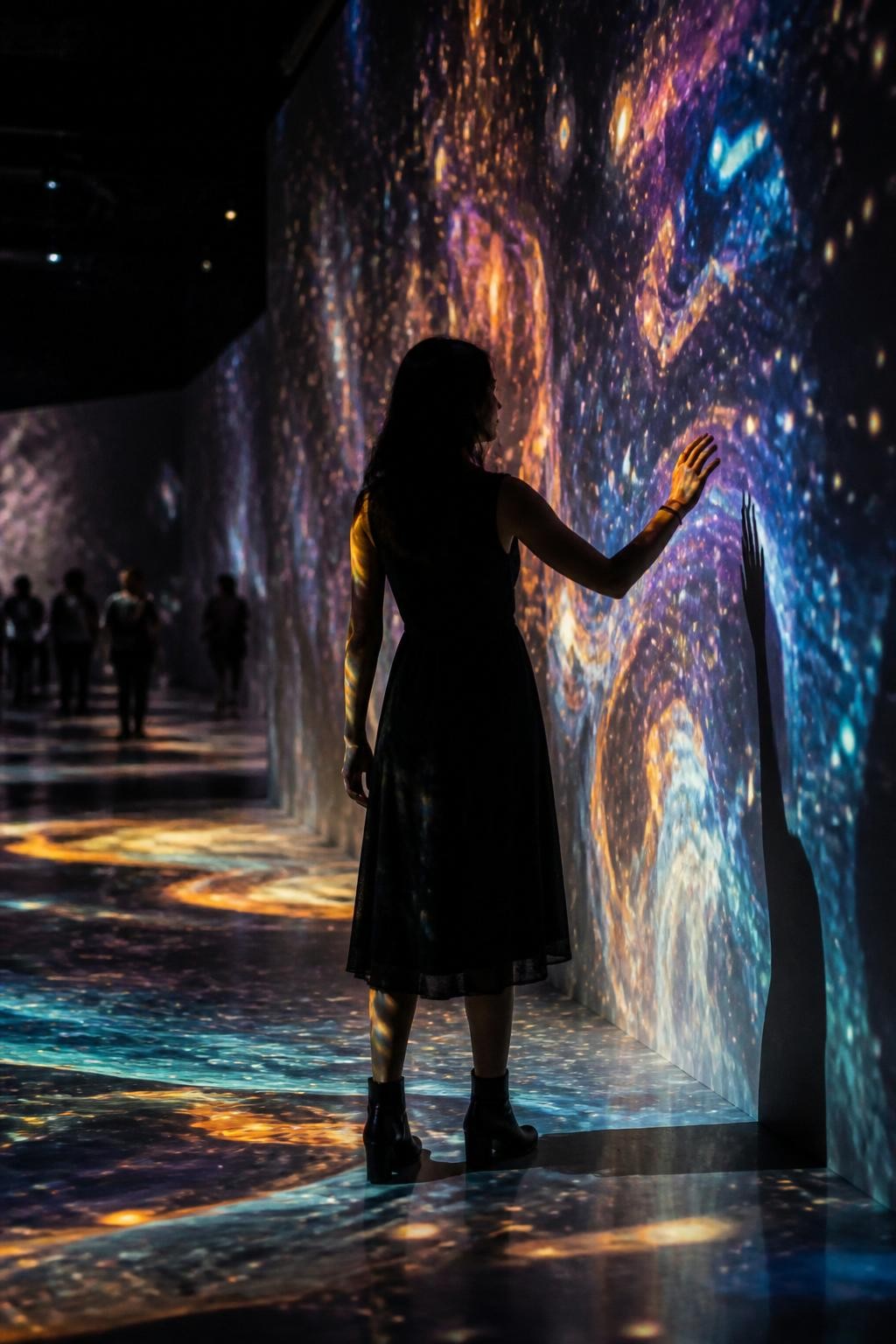
This pose works best in a digital art or projection exhibit. Ask her to stand where the light falls across her outfit and lift one hand gently toward the wall. The body should stay still while the moving light creates interest.
The face does not need to be clear here. In fact, the silhouette makes the photo feel more artistic. Shoot from behind or slightly to the side so the projection, body shape, and room atmosphere all show.
11. Long Gallery Back Glance
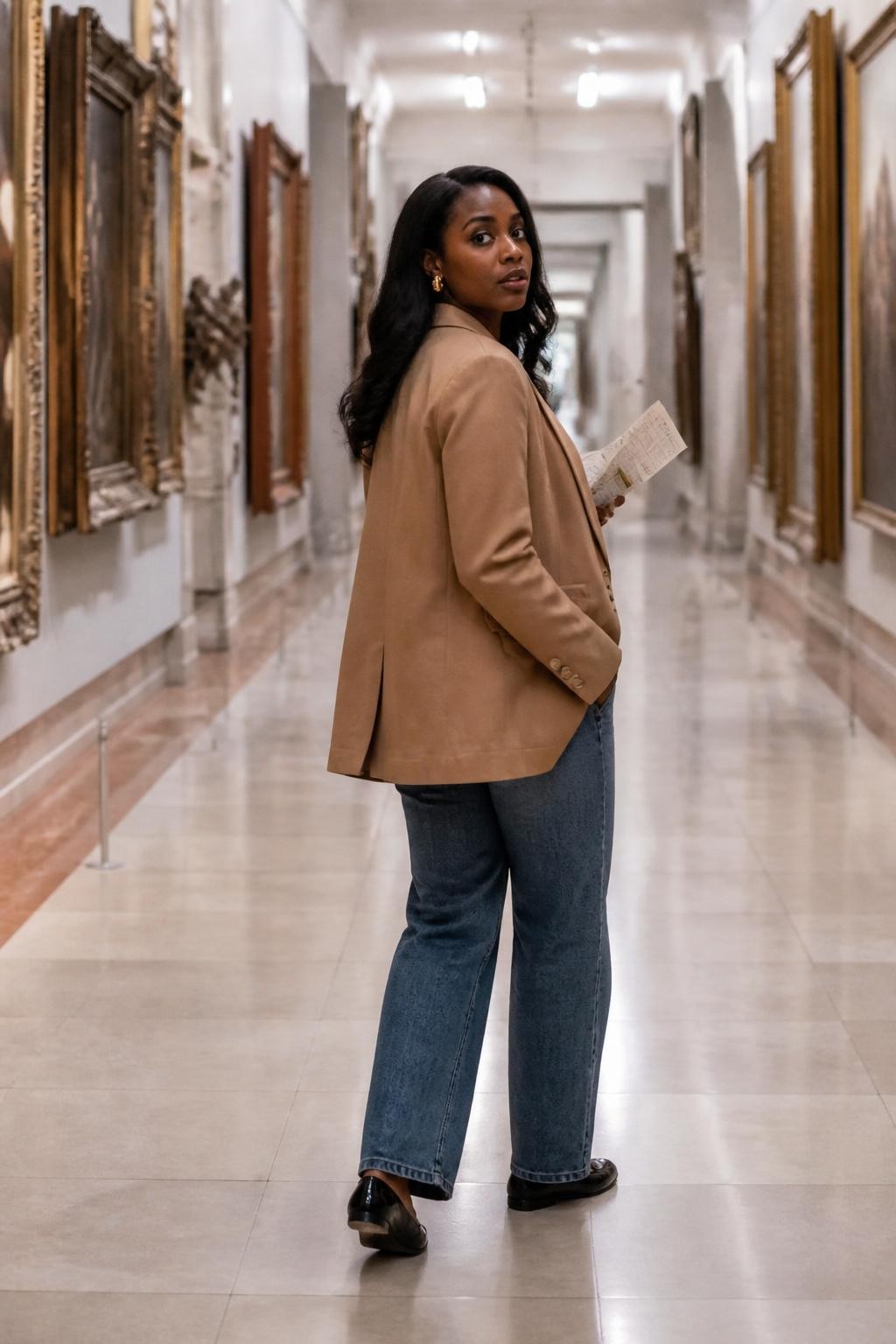
This pose uses the long hallway to create a strong travel-photo look. Ask her to walk away from the camera, then look back over one shoulder. The museum map gives the pose a natural reason to pause.
A hallway with artwork on both sides works best because it creates depth. Keep the walking pace slow so the photographer can catch the turn clearly. This pose feels stylish while still looking like a real museum visit.
12. Courtyard Statue Frame
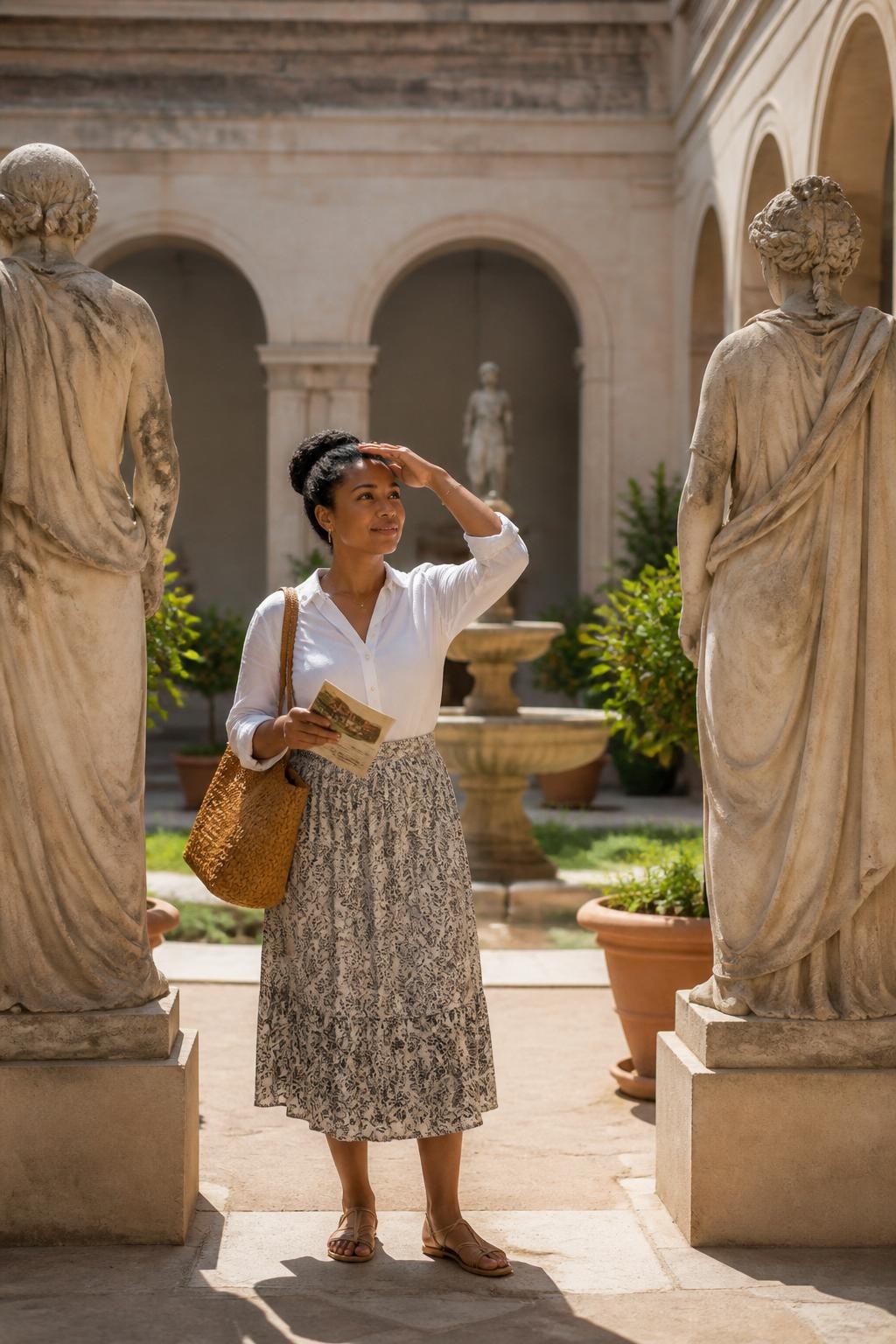
This pose is perfect for museums with courtyards, gardens, or outdoor sculpture areas. Place her between statues or arches so the setting frames her naturally. A hand shading the eyes adds a small movement that feels useful in the sun.
The body should stay loose, with one foot slightly forward or one knee softly bent. Let her look toward the fountain, garden, or path instead of the camera. The result feels calm, pretty, and connected to the museum grounds.
13. Sketchbook Floor Pause
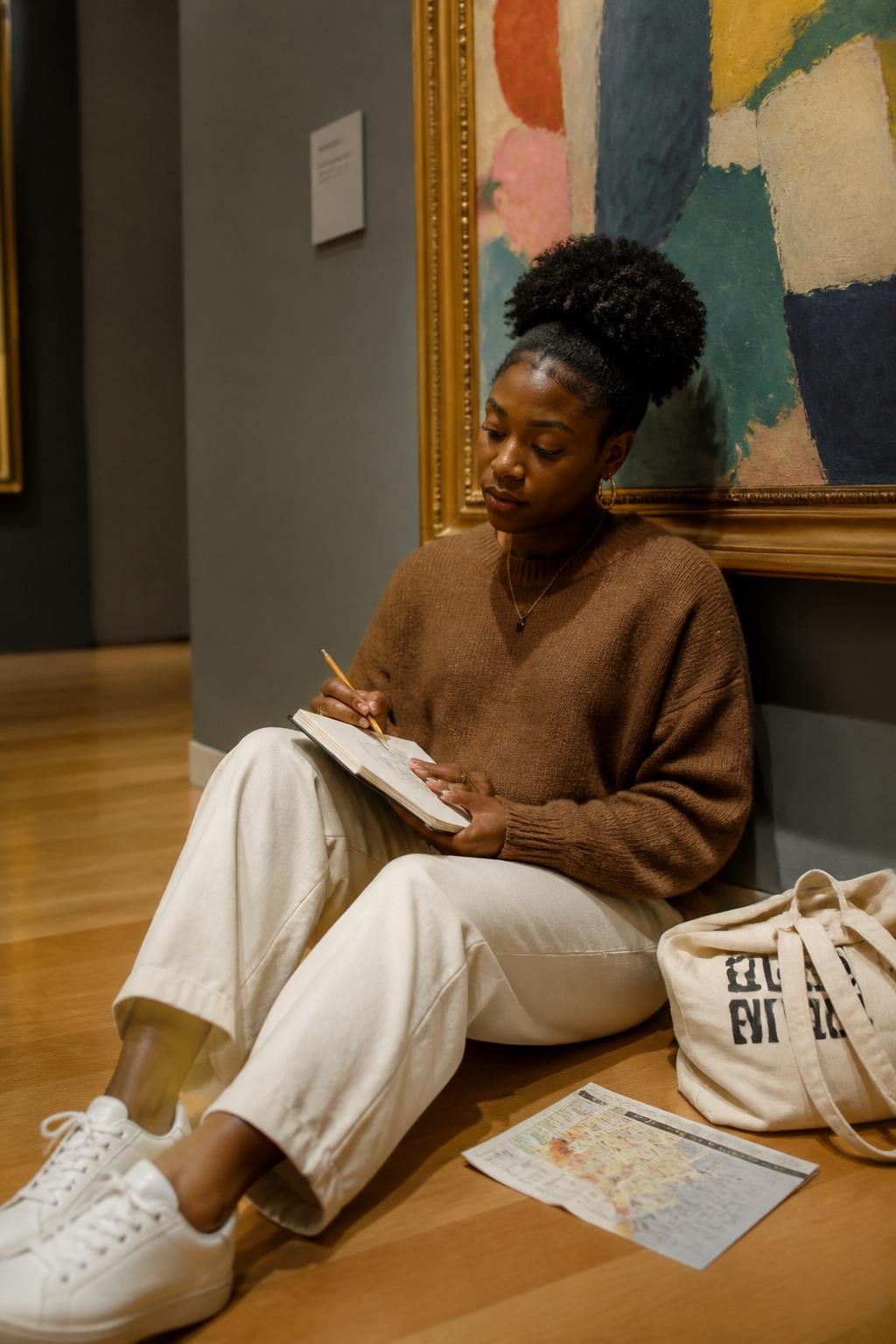
This pose feels personal and creative because it shows someone responding to the art. Ask her to sit neatly on the floor where allowed, with the sketchbook resting on her lap. Looking down at the page will make the pose feel natural.
Keep the frame wide enough to show the artwork nearby, but focus on her body, hands, and sketchbook. A tote bag, map, or pencil case adds context. This pose is perfect for art lovers, solo trips, and museum content that feels thoughtful rather than posed.